Some of the most important things about a tent only become clear once you actually spend a weekend in it.
ZONKOO community member AyDuwe HM recently took the Vega on a weekend camping trip by the water. Once the bedding and gear were inside, one of the first things she noticed was how much room was still available:
“It gave us plenty of space for sleeping and storing our gear.”
Another thing that stood out was the amount of natural light inside the tent:
“The large windows and clear roof panels let in lots of natural light, so the inside felt bright and comfortable.”
Those two observations reflect two practical questions that often come up once a family settles into a tent: Is there still enough room for gear after the beds are set up? And as the tent gets larger, does the interior start to feel dark or enclosed?
For the Vega, the value of its 129 sq ft interior, large windows, and inflatable support structure ultimately comes down to how the tent performs in real use—whether a family can settle in for the weekend and still feel comfortable inside.

Once the Beds and Gear Are In, 129 sq ft Starts to Matter
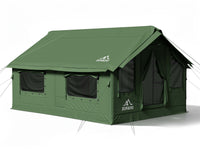
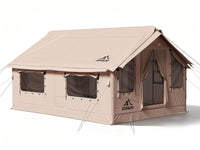
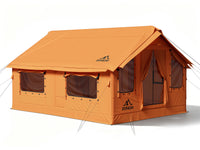
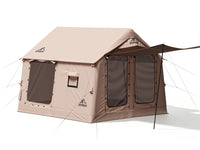
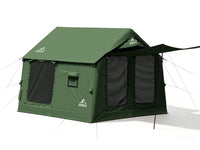
The Vega accommodates 2–6 people, with approximately 129 sq ft of interior space and a peak height of 7'1".
Looking at capacity alone, it is easy to think of a tent simply in terms of how many people it can sleep. But on a family camping trip, backpacks, clothing, shoes, storage bins, and other everyday gear also take up room.
The real test comes once all of that is inside.
The Vega uses inflatable air beams as its main support structure, so there is no center pole taking up the main living area. With fewer campers, more room can be left for gear, tables, chairs, and relaxing. With a larger group, the layout can be adjusted around the number of beds without having to work around a central support pole.
The 7'1" peak height also makes the interior easier to use. Adults can stand upright inside, making it more comfortable to change clothes, arrange bedding, or reach gear without constantly bending over.
The value of 129 sq ft is not simply about fitting more inside. It is about retaining enough room to move around and stay organized after the beds, luggage, and everyday gear are in place. For families planning to spend an entire weekend at the same campsite, that can matter more than simply fitting in one more mattress.
Further Reading: Want a closer look at the Vega’s space, setup, and family-camping features? Read Vega Inflatable Outdoor Tent: A Spacious Inflatable Tent Built for Family Camping.

Natural Light Changes How a Large Tent Feels During the Day
AyDuwe HM’s comments about natural light also show how the Vega’s window design translates into the camping experience.
The Vega features 7 windows, including side windows and skylights, allowing natural light to enter from above and from multiple directions instead of relying mainly on the tent door.
That matters in a 129 sq ft interior.
If a large tent is only bright near the entrance, the areas farther inside can start to feel darker and more enclosed. With light entering from both the roof and the sides, the interior stays naturally brighter in the morning, while organizing gear during the day, or simply spending time inside.
The windows also help maintain a visual connection with the campsite.
The side windows keep the surrounding trees and campsite in view, while the skylights provide views of the sky and changing daylight throughout the day. The tent provides shelter without making the interior feel completely cut off from the outdoors.
That sense of openness can also be adjusted.
The Vega’s windows can be configured for daytime, nighttime, and different camping needs. During the day, the clear panels can remain uncovered for more light and a wider view. At night, the fabric covers can be closed for additional privacy. Mesh windows and hidden ventilation openings also help maintain airflow without requiring the main door to stay wide open.
For multiple campers, that balance matters just as much as the amount of light. People may relax inside during the day, several campers may sleep inside at night, and gear may remain in the tent for extended periods. A tent with this much interior room also needs enough flexibility to balance natural light, airflow, and privacy.

An 11-Minute Setup Leaves More Time for the Weekend
The Vega uses an integrated Air Beam support structure, so there is no need to install traditional rigid main poles one by one. Setup takes 11 minutes.
For a family tent of this size, the advantage of an inflatable structure is not simply saving a few minutes. It also reduces the time spent sorting, connecting, and positioning multiple poles, which can make larger tents more complicated to assemble.
There is already plenty to handle after arriving at the campsite.
Bedding needs to be set up, tables, chairs, food, and gear need to be unloaded, and the interior still needs to be arranged. If the tent itself takes a long time to assemble, the entire process of getting settled takes longer too.
Once the Vega is unfolded and inflated, the stakes and guy lines can be secured before moving on to the interior setup. The air-beam system also includes a built-in pressure relief valve that helps manage overinflation and pressure changes caused by temperature shifts.
This setup style also fits the way the Vega is intended to be used.
It is not designed as a lightweight backpacking tent. It is better suited to car camping where a vehicle can reach the campsite, especially for family or group weekend trips. The priority is not minimizing packed size and weight, but making it easier to establish a spacious campsite setup once you arrive.
Weekend Camping Calls for More Than Fair-Weather Comfort
When you stay at the same campsite for several days, the tent will not only face the clear conditions you had when you first set it up.
Weather can change, daytime and nighttime use can differ, devices may need power, and doors and windows may need to be adjusted as temperatures and privacy needs change.
The Vega uses PU5000 mm waterproof fabric, fully taped seams, and a 38-point anchoring system to help handle rain and changing wind conditions during normal camping use.
Because a larger tent presents more surface area to the wind, the stakes and guy lines still need to be properly secured after inflation and checked as ground and weather conditions change. When properly set up and fully secured, the Vega can withstand winds of up to 50 mph.
Of course, that does not mean the tent is intended for extreme weather. If conditions worsen, leave the campsite or move to a safer location as needed.
Beyond weather protection, some less noticeable features become more useful during longer stays.
The Vega includes an AC cable access port, allowing an external power cable to enter the tent without running directly through the doorway. Its adjustable stove jack opening can be configured for compatible stovepipe setups.
For families planning to stay at the same campsite for an entire weekend, details like these become more useful the longer the tent is in use.
Vega
When One Trip Turns Into Looking Forward to the Next
Once a tent has actually been used outdoors, questions about space, gear organization, and daytime comfort become real camping experiences rather than things that are difficult to judge from a product page.
At the end of her post, AyDuwe HM wrote:
“It’s a great tent for family camping, and we’re looking forward to taking it out again!”
If a weekend trip ends with you already thinking about taking the tent out again, it is no longer just a new piece of camping gear. It starts to become something a family returns to as part of its outdoor life.
That is also where ZONKOO hopes its tents ultimately belong.
Not just in product photos, but beside the water, among the trees, and at real campsites—making everyday things like sleeping, storing gear, and relaxing easier while still keeping you connected to the outdoors.