You don't necessarily need a 4-season tent for winter camping. The right choice depends on expected snowfall, wind conditions, campsite exposure, and how easily you can reach your vehicle or shelter, not just overnight temperatures.
For car camping at an established campground, some 3-season tents can work in winter when the weather is stable, and little snow or wind is expected. A 4-season tent is better suited to prolonged snowfall, strong winds, exposed terrain, or remote trips where evacuation is difficult.
Understanding how these tents differ in construction, weather protection, and ventilation will help you choose the right one for your trip.
3-Season vs 4-Season Tent: Quick Comparison
|
Feature |
3-Season Tent |
4-Season Tent |
|
Best suited for |
Spring, summer, fall, and mild winter conditions |
Winter camping, snow, strong winds, and exposed terrain |
|
Support structure |
Generally lighter and simpler |
Stronger, often with additional support points |
|
Snow handling |
Not designed for sustained snow accumulation |
Better suited to prolonged snowfall and heavier snow loads |
|
Wind resistance |
Typical campground conditions |
Strong winds and exposed locations |
|
Tent body |
More mesh panels |
More solid fabric |
|
Ventilation |
More open airflow |
More controlled airflow to manage moisture |
|
Weight |
Generally lighter |
Generally heavier |
|
Common uses |
Car camping, campgrounds, and backpacking |
Snow camping, winter backpacking, and alpine trips |
What Actually Makes a Tent 3-Season or 4-Season?
There's no fixed temperature that separates a 3-season tent from a 4-season tent. The main differences are structural strength, fabric coverage, wind and snow resistance, and ventilation.
Support structure
3-season tents balance low weight, easy setup, and everyday weather protection. Their support structures are typically lighter and simpler.
4-season tents use stronger support systems and more compact designs to maintain stability in strong winds.
Fabric coverage and mesh
3-season tents generally have more mesh panels to improve airflow in warmer weather.
4-season tents use more solid fabric to reduce exposure to cold winds and blowing snow.
Wind and snow resistance
3-season tents can handle typical camping weather, but their wind and snow resistance varies by model. Most aren't designed for prolonged strong winds or heavy snow accumulation.
4-season tents typically have stronger structures and shapes that reduce wind exposure and snow buildup, making them better suited to demanding winter conditions.
Ventilation
3-season tents rely on mesh panels and larger openings for airflow.
4-season tents use more controlled ventilation to release moisture while limiting exposure to wind and snow.

Can You Use a 3-Season Tent for Winter Camping?
Yes, if the weather and campsite conditions are suitable. Wind, snow accumulation, and campsite exposure matter more than whether temperatures drop below freezing.
When a 3-season tent may be enough
A 3-season tent may work when:
- You're staying at an established or sheltered campground.
- Sustained snowfall isn't expected.
- Winds are light.
- The trip is relatively short.
- The weather forecast is stable.
- Your vehicle or an evacuation route is nearby.
Under these conditions, staying warm at night is often the main concern. Focus on a properly rated sleeping bag, an insulated sleeping pad, and suitable clothing rather than switching tents simply because it's winter.
If prolonged snowfall, accumulating snow, or strong winds are expected, reassess your tent choice and trip plans.
When Do You Actually Need a 4-Season Tent?
A 4-season tent is the better choice when snow loads, strong winds, exposed terrain, or limited evacuation options demand greater structural strength. Its main advantage is weather protection and stability, not insulation.
Sustained snow accumulation
Light flurries and steady snowfall place different demands on a tent. As snow builds up on the roof, the structure must support the additional weight.
In these conditions, snow-load capacity and structural strength matter more than waterproofing alone.
Sustained strong winds
Strong winds place continuous stress on a tent, especially on ridgelines, elevated terrain, and open campsites.
A tent designed for high winds is more appropriate than relying on extra guy lines to compensate for a lighter structure.
Highly exposed campsites
Alpine areas, locations above the tree line, and campsites without natural shelter often experience stronger winds, heavier snowfall, and rapid weather changes.
In these environments, a tent must withstand demanding conditions, especially when alternative shelter isn't available.
Remote trips with limited evacuation options
The farther you travel from roads, vehicles, and established facilities, the more you depend on your tent for shelter.
Even with a favorable forecast, remote winter trips require a greater safety margin for unexpected weather and equipment failure.
What About Inflatable Tents for Winter Camping?
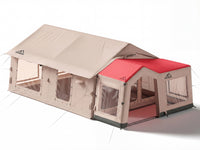
Inflatable tents can also work for some winter camping trips. Larger models are generally better suited to family car camping and established campgrounds than remote backpacking.
Rather than relying solely on a 3-season or 4-season label, consider the weather, anchoring system, air beam pressure, and sleeping insulation.
What should you consider when using an inflatable tent in winter?
Three factors are particularly important:
- Air beam pressure: Cold temperatures can change air pressure. Check that the beams remain properly inflated and adjust them according to the manufacturer's instructions.
- Ground anchoring: Secure the tent with stakes and guy lines. On frozen, snowy, or wet ground, check that all anchor points hold firmly.
- Ventilation and warmth: Maintain airflow to reduce condensation. Use appropriate sleeping bags, insulated sleeping pads, and clothing to stay warm, especially when sleeping on cold ground.
What type of inflatable tent works for winter family camping?
For family car camping at an established campground with stable weather, look for a spacious inflatable tent with reliable anchoring and adjustable ventilation.
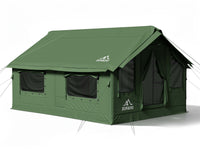
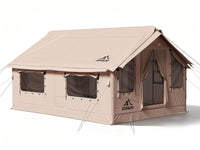
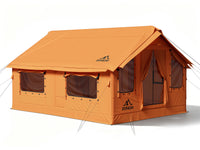
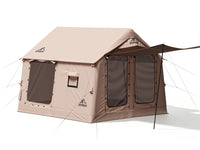
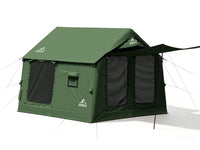
ZONKOO Vega offers 129 sq ft of interior space and approximately 7.1 ft of standing height, providing room for beds, sleeping bags, and winter gear. Its 38-point anchoring system uses stakes and guy lines to secure the tent during extended campground stays.
Vega also features five windows, two skylights, and concealed vents for managing airflow. An adjustable stove jack accommodates compatible heating setups. Always follow the heating equipment manufacturer's instructions for ventilation and safe clearances.
Vega is best suited to family winter camping at established campgrounds with relatively stable weather and nearby vehicle access. It isn't a substitute for a 4-season tent designed for prolonged strong winds, heavy snow, or highly exposed terrain.
Vega
So, Do You Need a 3-Season or 4-Season Tent?
Choose based on the conditions you'll face, not the season alone.
For cold weather without heavy snow or strong winds, a suitable 3-season tent may be enough when paired with proper sleeping insulation. For sustained snowfall, strong winds, or exposed terrain, a 4-season tent provides the stronger shelter those conditions demand.
A 4-season tent isn't necessarily better for every winter trip. What matters is choosing a tent that can handle the expected weather and terrain.