When a family or group camps for several days, a large tent needs to do more than provide enough sleeping space. Once mattresses and luggage take up the main tent, the room left for eating, relaxing, setting up tables and chairs, and organizing gear also affects how comfortable the campsite feels.
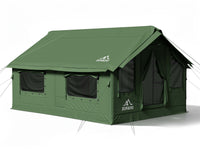
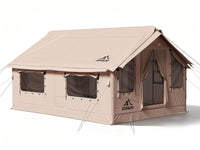
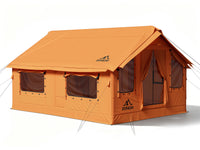
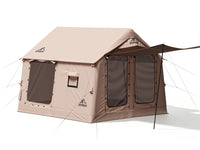
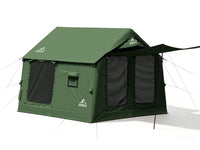
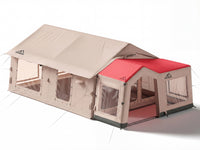
Coody 17.2 + AirTarp and ZONKOO Draco Plus both extend the living space beyond the main tent. Coody starts with the 17.2 large inflatable tent and adds an optional outdoor area with the AirTarp, while Draco Plus combines a 183 sq ft main tent with a 69 sq ft Gazebo in one complete setup. Both provide extra living space outside the main tent, but which layout works better for family and group camping depends on how each one performs in actual use.
Key Specifications
|
Comparison |
Coody 17.2 + AirTarp |
ZONKOO Draco Plus |
|
Capacity |
2–10 people |
2–10 people |
|
Main Tent Interior Area |
185.14 sq ft |
183 sq ft |
|
Outdoor Living Space |
96.87 sq ft AirTarp |
69 sq ft Gazebo |
|
Total Usable Space |
282.01 sq ft |
252 sq ft |
|
Layout |
Two-zone main tent + zip-on AirTarp |
Two-room main tent + Gazebo |
|
Interior Height |
82.68 in |
87 in |
|
Total Weight |
172.01 lbs |
189 lbs |
|
Setup Time |
— |
16 minutes |
|
Main Tent Fabric |
210 gsm TC Canvas |
300D Stretch Oxford + PU coating |
|
Packed Configuration |
Main tent: 2 bags + AirTarp: 1 bag |
2 bags |
|
Current Total Price |
$2,798 |
$2,099.99 |
Main Tent Space and Layout
For multiple campers, the difference between 185.14 sq ft and 183 sq ft matters less than whether mattresses, personal gear, and walking paths can be arranged comfortably. The main tents of the Coody 17.2 and Draco Plus are very similar in size, and both offer divided layouts, allowing separate sleeping areas instead of placing every mattress in one completely open space.
With two or three people, there is still plenty of room in the main tent for storage bins, clothing, and personal items. As the group gets larger, mattresses take up more of the floor, and keeping tables, shoes, and frequently used gear inside the sleeping area can quickly reduce walking space.
Draco Plus has an interior ceiling height of 87 in, compared with 82.68 in for the Coody 17.2, giving adults more headroom for standing, changing clothes, and arranging bedding. Both are large tents with enough height for standing; however, the bigger difference in daily use comes from how the living space outside the main tent is arranged.
Outdoor Living Space
After staying in a large tent for several days, the value of having a separate outdoor living space becomes more obvious. Some people may be getting ready to sleep while others are still eating and talking. Wet shoes and gear after rain are better kept out of the sleeping area, and if tables and chairs stay inside the main tent during the day, they have to be moved again at night. These are not problems that can be solved simply by adding more sleeping space.
The Coody AirTarp provides 96.87 sq ft of extension space and connects to the 17.2 with a zipper. Camping tables, chairs, and frequently used gear can be moved here from the main tent, reducing the amount of sleeping space taken up by daytime activities. Mesh and TPU panels can also be used to adjust how enclosed the area is. In comfortable weather, it can stay more open for airflow; when wind or rain moves in, more coverage can be added so the area can continue to be used for relaxing, dining, and organizing gear.
The 69 sq ft Gazebo is part of the Draco Plus layout from the start. The 183 sq ft main tent can mainly be used for sleeping and storing personal items, while the Gazebo provides space for tables, dining, and group conversations. If some family members go to bed earlier, others can continue spending time in the Gazebo outside the main tent without having to move tables and chairs every day to clear the sleeping area.
Both setups solve the same campsite living problem, but they use the space differently. The key consideration is whether you want an outdoor living area that can be added as needed or one that remains a fixed part of every group camping setup.

Setup and Campsite Requirements
Although large inflatable tents eliminate traditional tent poles, a complete setup still involves unfolding the tent, adjusting its direction, inflating it, staking it down, and securing the guy lines. Once an outdoor living area is added, you also need to consider how much campsite space the full setup will require.
The Coody 17.2 and AirTarp are two parts that can be used separately. If a short trip only requires the main tent, the AirTarp can stay at home. When using the complete setup, the AirTarp still needs to be connected, inflated, and secured in addition to the 17.2. Its 96.87 sq ft extension space also means you need to leave enough room in front of the tent when choosing a campsite.
The Draco Plus main tent and Gazebo are designed to be set up together, with the full process taking 16 minutes. Once at the campsite, the sleeping area and shared activity area can be established at the same time without having to deal with a separately purchased extension component. However, its 252 sq ft of total space, plus the area needed for the guy lines, also requires a sufficiently large campsite.
For either setup, choosing a campsite should not be based only on whether a “10-person tent” will fit. Where the vehicle is parked, which direction the entrance faces, whether there are trees or other campsite facilities nearby, and whether the guy lines can be fully extended should all be considered in advance.
Transport and Storage
When loading a large inflatable tent into a vehicle, both total weight and the number of packed pieces affect handling.
The Coody 17.2 main tent weighs 145 lbs, and the 27.01 lb AirTarp brings the complete setup to 172.01 lbs. The main tent is packed in two bags, while the AirTarp is stored separately, so bringing the complete setup means loading and managing three separate bags. When the AirTarp is not needed, only the main tent needs to be carried and stored.
Draco Plus weighs 189 lbs and is stored in two bags, with the main tent and Gazebo carried together as a complete setup. The total weight is higher, but loading, unloading, and storage after the trip are all handled in two packed pieces.
Both are large car-camping setups and are better suited to campsites where the vehicle can get close to the tent site. Before long-term storage at home, make sure the tent is completely dry, then store it in a dry indoor area or garage.
Fabric and Weather Protection
When camping for several nights, fabric affects not only how the tent handles rain and moisture but also abrasion resistance, ventilation, and post-trip maintenance.
The Coody 17.2 uses 210 gsm TC Canvas made of 65% polyester and 35% cotton, and the main tent can be paired with a rainfly for added rain protection. The AirTarp uses mesh and TPU panels to adjust how open the outdoor area is, allowing more ventilation in comfortable weather and more enclosure when wind or rain moves in. Canvas needs to be thoroughly dried after getting wet, so rainy trips require more drying time after returning home.
Draco Plus uses 300D Stretch Oxford with a PU coating and a PU5000 mm waterproof rating. In addition to rain protection, the fabric offers good abrasion resistance, helping it handle frequent entry and exit, everyday contact with gear, and pet scratches during camping. Multiple doors and windows in the main tent and Gazebo maintain airflow, while mud and surface dirt are also easier to wipe off and dry after the trip.
If you prefer the feel of a Canvas tent and the adjustable design of the AirTarp, the Coody 17.2 may be a better fit. If you camp frequently, often bring pets, or prioritize abrasion resistance and easier routine maintenance, Draco Plus is better suited to those needs.

Price and Overall Value
The Coody 17.2 currently costs $2,199, while the AirTarp costs $599, bringing the full setup to $2,798 when purchased at individual product prices. The buying process is flexible: you can start with the 17.2 as the main tent and add the AirTarp later as your camping needs change. Coody also currently offers bundle discounts, so the final checkout price may vary depending on the promotion.
Draco Plus currently costs $2,099.99, with the main tent and Gazebo included in the same setup. For families that already know they want a separate shared activity area for group camping, this budget covers both the main tent and the gazebo at once, without the need to purchase an extension later.
The main difference in value comes down to how the two setups are purchased. Coody allows you to buy the components separately and combine them as needed, while Draco Plus provides a complete main tent and Gazebo setup at a lower total price. The choice depends on whether you prefer the flexibility to expand later or want to complete the entire group camping setup in one purchase.
Which Setup Is Right for You?
If you want a somewhat larger activity area outside the main tent, prefer Canvas tents, and want to decide whether to bring the AirTarp based on each trip, the Coody 17.2 + AirTarp provides a larger outdoor area and a more flexible setup. The complete configuration costs more and requires managing three packed pieces, but the AirTarp does not need to come on every trip.
If your family or group places more importance on having clearly divided living areas, Draco Plus is more suited to that use. The two-room main tent handles sleeping and personal belongings, while the Gazebo provides space for dining, conversation, and daily activities without requiring a separate extension purchase. The 300D Oxford fabric also handles frequent use, gear contact, and everyday pet scratches. Combined with its lower total purchase price, it is a better fit for campers who want a complete large family camping setup from the start and plan to stay at the same campsite for several nights.
If you want to compare Draco Plus with another large family tent layout, read: Zempire Evo TXL V2 vs. ZONKOO Draco Plus: Which Large Inflatable Tent Is Better for Multi-Day Family Camping?