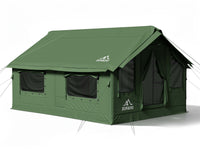
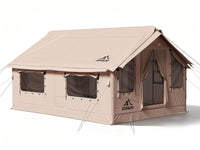
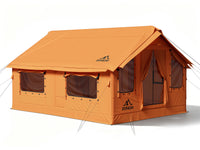
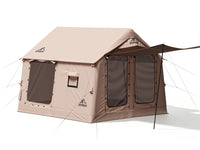
For many people, the appeal of glamping is not simply staying in a beautiful tent. It is about being able to rest comfortably, organize belongings, spend time with family, and continue enjoying camp life when the weather changes.
This also means the tent needs to do more than provide a place to sleep. After the mattresses are set up, where will the luggage go? Can several people change clothes and move around at the same time? Is there still somewhere to sit and rest when it rains? These details all affect the experience.
So, are inflatable tents suitable for glamping?
The answer is yes, but not every inflatable tent can meet the needs of glamping. A tent suitable for glamping should provide enough usable area, comfortable standing height, good ventilation and natural light, and an interior layout that makes it easy to arrange mattresses, tables, chairs, and gear. For families, car campers, and groups of friends, large inflatable tents usually make campsite living easier than compact tents.
What Does a Glamping Tent Need?
Traditional camping often focuses first on rain protection, warmth, and sleeping capacity. Glamping also considers whether the tent remains practical once several people are staying inside.
After a family of four sets up two inflatable mattresses, they still need room for clothing, shoes, and everyday items. If luggage blocks the entrance, children need to step over the mattresses to change clothes, and there is no open area for activity when it rains, the experience will not feel comfortable even if the tent is rated for six people.
When choosing a glamping tent, maximum capacity should not be the only consideration. Whether a clear walkway remains after the mattresses and luggage are inside, and whether everyday items are easy to reach, are better signs of how practical the tent will be.
If you also plan to add folding tables and chairs, rugs, or an inflatable sofa, their positions should be planned in advance. Glamping comfort does not come from filling the tent with furniture. It comes from allowing sleeping, storage, and daily activities to happen without interfering with one another.
Why Are Inflatable Tents Suitable for Glamping?
Inflatable tents use air beams instead of traditional poles, reducing the need to assemble poles, thread them through sleeves, and locate connection points. For larger inflatable glamping tents, this setup method is easier to manage and leaves more time for arranging beds, lighting, and the campsite.
When a family arrives at the campsite in the evening, the last thing they want is to spend the remaining daylight checking poles and connection points. The inflatable structure allows the main tent body to take shape more quickly, so they can set up the mattresses, prepare dinner, or finish arranging the campsite before the children become tired.
Many large inflatable tents also provide greater interior height and a more complete floor area. They can hold sleeping gear, tables, chairs, storage boxes, and everyday equipment, allowing the tent to serve as more than a place to stay overnight.
The inflatable structure also usually avoids placing a large support pole in the center of the tent. Mattresses can be placed side by side, shoes and storage items can stay near the entrance, and tables and chairs do not need to be arranged around a center pole. For group glamping, this complete interior layout is more practical.
What Kind of Inflatable Tent Is Better for Glamping?
A tent being large does not mean it is suitable for glamping. The main question is whether people can still walk, rest, and organize their belongings after the mattresses, luggage, and furniture are inside. Families or groups of friends can consider large inflatable tents, but the actual layout still needs to be evaluated.
Standing height is an easy detail to overlook. In the morning, several people may be getting dressed, arranging the beds, and looking for shoes or jackets at the same time. If everyone can only stand upright in the center, the tent can quickly feel crowded. The more vertical the walls are, the easier it is to place furniture along the edges and leave a walkway in the middle.
Windows also affect the living experience. After several people sleep inside, sleeping bags, damp clothing, and temperature changes can make the tent feel stuffy. Windows placed in different directions help improve airflow, while natural light makes the interior feel more open during the day.
Rain protection and floor design determine whether the tent remains comfortable when the weather changes. During light rain, shoes, folding chairs, and some gear may need to be moved inside. If the floor becomes damp or water enters around the windows, the glamping experience can quickly become inconvenient.
Large inflatable tents are usually heavier and bulkier when packed, and they also require a suitable pump. They are therefore better suited to car camping and campsites that vehicles can reach directly or approach easily. After inflation, the tent still needs to be secured correctly with stakes and guylines, and camping plans should be adjusted according to actual weather conditions.

Why Does Group Glamping Need Better Zoning?
When two people are camping, keeping mattresses and luggage in the same area usually does not cause much trouble. As the number of people increases, shoes, clothing, bedding, and everyday gear can quickly fill the tent.
After several nights, the main issue is often not whether everyone can sleep inside, but whether each person can rest, move around, and reach their belongings easily. A child may already be asleep while the adults still need to organize clothes, cameras, or other gear for the next day. If all activities take place in the same area, they can easily disturb one another.
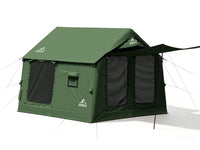
The two-room layout of ZONKOO Draco keeps these activities from competing for the same area. One side can remain a quieter sleeping area, while the other can be used for luggage, changing clothes, or everyday rest. During the day, someone can organize gear without taking over the entire bedside area. At night, items can be reached without moving between the mattresses.
For families or groups of friends, the difference is clear: everyday items are easier to find, the walkway remains clearer, and the tent is less likely to become disorganized after several days.
If you want to learn more about how a two-room layout can improve group campsite living, you can read "Draco Inflatable Tent: A Spacious Large Inflatable Tent Built for Group Campsite Living".
Draco
How Can Glamping Extend Beyond the Tent?
When the weather is pleasant, most people do not stay inside the tent all day. Breakfast, coffee, conversation, and reading are often more enjoyable outdoors. Part of the appeal of glamping comes from connecting comfortable living with the natural surroundings.
If tables and chairs can only be placed fully outdoors, strong sun or short changes in weather can interrupt campsite activities. Many campers therefore prefer to have a semi-open area outside the sleeping section for tables, lighting, and everyday items.
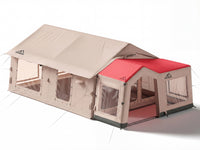
ZONKOO Draco Plus adds a Gazebo area outside the main tent. Beds, clothing, and luggage can stay inside the main tent, while tables, chairs, camp lights, and lounge items can be placed outside. If one person wants to rest quietly, others can still eat or talk under the Gazebo without repeatedly moving items inside the tent.
For family gatherings, trips with friends, or multi-day stays, this indoor-outdoor connection is more practical than simply adding more area. Breakfast can be enjoyed outside, the afternoon can be spent reading, and the evening can continue under the camp lights while the main tent remains organized.
If a two-room interior layout is the priority, Draco is the more direct choice. If daily activities should extend into a semi-open area, Draco Plus offers more ways to use the campsite.
Draco Plus
How Can You Arrange a More Comfortable Glamping Campsite?
The larger the tent, the more important planning becomes. Glamping is not about moving more furniture inside. It is about keeping sleeping, storage, and daily activities from interfering with one another.
Mattresses should not block the entrance or cover major ventilation points. If shoes, backpacks, and storage boxes are piled beside the door, getting in and out at night becomes difficult and may create a tripping hazard. Frequently used items can stay near the entrance without blocking the walkway, while less-used gear can be stored along the edges.
Folding furniture, rugs, and storage boxes can improve comfort, but their size should match the usable area inside the tent. When using large inflatable tents for camping for group glamping, it is better to arrange the beds first and then decide where storage and rest areas will go, rather than bringing in all the furniture before checking the walkway.
Lights should be placed on stable surfaces, and hot components should not touch the tent fabric. Clothing, toiletries, and items used at night should remain easy to reach so the tent stays organized during a multi-day stay.
Are Inflatable Tents a Good Choice for Glamping?
For families, car campers, and groups of friends, inflatable tents can be a practical choice for glamping. They reduce the complexity of setting up a large tent and make it easier to arrange mattresses, luggage, tables, chairs, and everyday items.
A tent suitable for glamping should allow people to sleep, store belongings, rest, and handle daily activities comfortably outdoors. Usable area, interior layout, ventilation, and weather protection all affect how comfortable several days at camp will be.
When a tent becomes more than an overnight shelter and can support daily needs, glamping becomes more meaningful. People can slow down, eat together, talk, rest, and enjoy nature more comfortably.