You can use an air mattress in a tent, as long as it fits comfortably and leaves enough space to access the entrance, store gear, and move around. For car camping, family weekend trips, or extended stays at a campsite, an air mattress can make sleeping outdoors feel more like sleeping in a bed at home.
But fitting the mattress inside is only part of the equation. Its height when inflated, the shape of the tent walls, how you inflate it, and overnight temperatures all affect comfort. Checking these details before your trip can help you avoid bringing a mattress that's too large, difficult to inflate, or uncomfortable to sleep on.
Is an Air Mattress Good for Tent Camping?
Air mattresses work well for campers who value comfort and don't need to carry their gear long distances. Compared with thinner sleeping pads, thicker air mattresses generally offer more cushioning, helping reduce pressure on your shoulders and hips when sleeping on hard ground. Raised models can also make getting in and out of bed easier. Add sheets, pillows, and blankets, and the setup feels more like home.
However, larger air mattresses tend to be heavier and bulkier to pack, making them better suited to car camping than backpacking. A thicker mattress doesn't necessarily provide better insulation. Standard air mattresses may lack adequate insulation, leaving you feeling cold from below on chilly nights. For cold-weather camping, you'll need an insulating layer and bedding suited to the expected overnight temperatures.
Further Reading: How to Sleep Comfortably in a Tent? A Guide to Camping Sleep Systems

How to Tell if an Air Mattress Will Fit in Your Tent
Don't rely on a tent's advertised sleeping capacity alone. A four-person tent might fit a queen-size air mattress, but the bed will also take up space you'd otherwise use for moving around and storing gear. What matters isn't just whether the mattress fits, but how much usable space remains once it's inside.
Check the actual dimensions of the mattress and tent
Common air mattress sizes in the U.S. include:
|
Mattress Size |
Typical Dimensions (L × W) |
Space Requirements |
|
Twin |
75 × 38 in |
Sleeps one and takes up less space |
|
Full |
75 × 54 in |
A snug fit for two sleepers |
|
Queen |
80 × 60 in |
Sleeps two but requires more room to move around |
|
King |
80 × 76 in |
Best suited to larger, more spacious tents |
These are common U.S. standard mattress dimensions. Air mattress sizes may vary by model, so always check the fully inflated measurements.
Once you know the mattress dimensions, compare them with the tent's usable floor length and width, not just its total floor area. In tents with sloping walls, a mattress may fit on the floor but press against the fabric once inflated. Even if the dimensions look right on paper, leave some clearance around the edges to avoid pressure against the tent walls, air beams, or door panels. You'll also need room to get in and out of bed, use the entrance, and organize your gear.
How to pair ZONKOO air mattresses with tents
ZONKOO offers both single and double air mattresses. The Single High Air Mattress measures 74.8 × 39.4 × 15.7 inches, while the Double High Air Mattress measures 78.7 × 59.1 × 15.7 inches. Both have built-in pumps, with single and double options to suit different camping setups.
Double Air Mattress
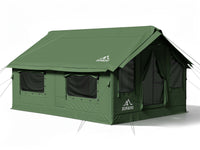
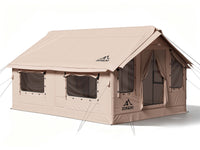
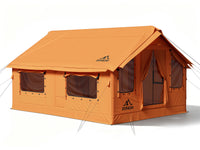
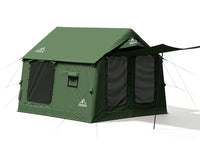
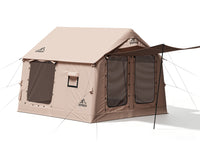
Beyond mattress dimensions, a tent's interior layout also matters. ZONKOO inflatable tents have relatively upright walls and no center support pole taking up floor space. This gives you more flexibility when arranging the interior and makes raised air mattresses easier to position.
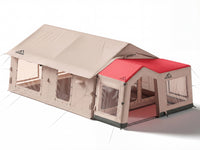
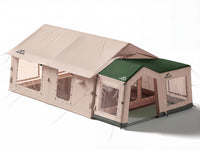
From the compact Lyra and Orion to the roomier Vega, Draco, and Draco Plus, each model offers different options for arranging beds, storing gear, and leaving room for activities.
|
ZONKOO Tent |
Tent Area |
Air Mattress Options |
Layout Suggestions |
|
Lyra |
65 sq ft |
Single air mattress |
Space for one sleeper and basic gear storage |
|
Orion |
86 sq ft |
Double air mattress |
Sleeping space for two, with room for bedside access and gear |
|
Vega |
129 sq ft |
Double air mattress, with additional beds as needed |
A roomier layout with flexible sleeping and activity space |
|
Draco |
183 sq ft |
A combination of single or double air mattresses based on group size |
Separate sleeping areas with space left for gear |
|
Draco Plus |
Main tent: 183 sq ft + gazebo: 69 sq ft |
Single or double air mattresses arranged within the main tent |
Main tent for sleeping and storage, with the attached gazebo providing additional activity space |
How to Position and Inflate an Air Mattress in a Tent
Check the ground and choose a spot for the mattress
Before pitching your tent, choose level ground with good drainage and clear away rocks, branches, and other sharp objects. If needed, place a protective groundsheet underneath the tent, but keep its edges within the tent's footprint. Otherwise, rainwater could collect between the groundsheet and tent floor.
Once the tent is up, decide where to position the mattress. Keep the entrance clear and leave enough room to get in and out of bed and store your gear. A clean, flat protective layer between the mattress and tent floor can also help reduce friction and the risk of punctures.
For raised air mattresses, check that you have enough headroom to sit up comfortably and get in and out of bed with ease. Make sure the mattress doesn't press against the tent walls or interior air beams.
Inflate the mattress inside the tent
For larger air mattresses, place the mattress inside the tent before inflating it. Set it where you want it, then pump it up. This prevents the hassle of trying to squeeze an inflated mattress through the tent door or moving it around afterward.
Before inflating, check how the pump is powered. If your mattress has a built-in pump, follow the product instructions to check its charging status and bring the appropriate charging cable. This helps prevent inflation problems at campsites without electrical outlets.
Follow the manufacturer's instructions and avoid overinflation. Tent air beams and air mattresses have different pressure requirements, so don't assume the same PSI setting works for both.
Once inflated, make sure the mattress feels supportive, the valve is properly sealed, and the surrounding walkways are clear. Then add your sheets and other bedding.

How to Sleep More Comfortably on an Air Mattress in a Tent
Stay warm overnight
Even a thick air mattress may offer little insulation. As the air and ground cool overnight, your body can still lose heat through the mattress. That's why thickness alone isn't a reliable measure of warmth.
For cold-weather camping, consider adding an insulated sleeping pad between your body and an air mattress that lacks built-in insulation. Pair it with a sleeping bag or blankets suited to the overnight temperature. When choosing a sleeping pad, pay attention to its R-value (thermal resistance). A higher R-value generally means better insulation. A basic protective layer won't replace proper insulation, and the best layering arrangement also depends on the design and instructions of your mattress and sleeping pad.
What to do if the mattress softens or gets damp
A mattress that feels slightly softer overnight isn't necessarily leaking. Falling temperatures can lower the air pressure inside, while the material of a new mattress may stretch slightly during its first few uses. You can add a little air as directed, but avoid overinflating. As daytime temperatures rise, check the mattress's firmness again to avoid excessive internal pressure. If it continues to lose a noticeable amount of air, inspect the valve, seams, and surface for leaks.
Moisture underneath the mattress doesn't always mean the tent is leaking. Humid air inside the tent can condense on cooler surfaces, forming water droplets. Keep the tent adequately ventilated and check beneath the mattress in the morning. If you find standing water, look for possible ground seepage or rainwater entering the tent. Let both the mattress and tent floor dry completely before packing them away.
Final Checks Before Your Trip
If you're using an air mattress in your tent for the first time, try setting everything up at home. Inflate the mattress, lie down, and sit up to test the headroom, bedside space, and ease of getting in and out of bed. Make sure the pump works properly, and pack insulation and bedding based on the weather forecast for your campsite. A little preparation can save you from making last-minute adjustments at camp.