When getting ready for a first tent camping trip, one practical question often comes up: How can I sleep comfortably in a tent? Is a sleeping bag enough, or do you also need a sleeping pad, air mattress, or camping cot? Setting up the tent, cooking, and spending the day outdoors may all go smoothly, but if hard ground, cold temperatures, or an uncomfortable sleeping position keep you awake at night, the next day of camping can be a lot less enjoyable.
To sleep more comfortably, it helps to think of a camping sleep setup in two layers. A sleeping pad, air mattress, or camping cot underneath provides support and separates your body from the ground, while a sleeping bag or blanket helps keep you warm. These options differ in comfort, space requirements, and how they are used. Combining the two layers in a way that fits your needs is what creates a comfortable camping sleep system.
Sleeping Pad, Air Mattress, or Camping Cot?
You can sleep with a sleeping bag directly on the tent floor, but the ground is hard, and the insulation underneath you becomes compressed by your body weight, making it less effective at reducing heat loss to the ground. That is why many campers add a sleeping pad, air mattress, or camping cot between themselves and the tent floor.
1. Sleeping Pad: Lightweight, Space-Saving, and Insulating
A sleeping pad lies directly on the tent floor and generally comes in foam, inflatable, or self-inflating styles. Unlike a home mattress, it is not designed to create a high sleeping surface. Instead, it provides cushioning and insulation from the ground in a relatively compact form.
Its biggest advantages are easy storage, portability, and minimal use of tent space. Inflatable sleeping pads, in particular, can pack down quite small. Two campers can also use one pad each without having to make room for a large double mattress. Foam pads are lightweight, but they may still take up considerable space when rolled or folded, while thicker self-inflating pads also tend to have a larger packed size.
In cooler weather, a sleeping pad’s insulation becomes especially important. Many products list an R-value. The higher the R-value, the better the pad resists heat loss to the ground. The R-value you need should be based on the expected nighttime temperature and the product’s recommended season of use, rather than thickness alone.
2. Air Mattress: More Comfortable, but Requires More Tent Space
An air mattress creates a full sleeping surface once inflated. It is generally thicker and wider than a sleeping pad and comes in both single and double sizes. The feel is closer to a mattress at home, making it a common option for couples or families when the vehicle can be parked directly at the campsite. A double air mattress also creates one complete sleeping area for two people and works well with sleeping bags, sheets, or blankets.
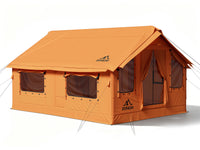
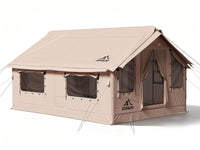
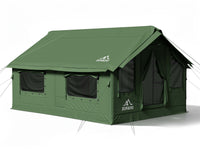
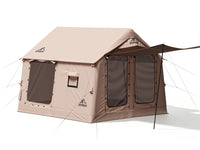
If a tent brand also offers air mattresses, choosing products from the same brand can make it easier to plan the sleeping area around the tent’s interior dimensions. ZONKOO offers both inflatable tents and air mattresses, and customers who purchase a tent can also choose a free inflatable sofa bed set as a gift, which is convenient for families looking to get both their tent and sleeping gear at once.
Double Air Mattress
There are several practical factors to consider with an air mattress. First is space: the mattress needs to fit while still leaving room for luggage and a clear path in and out of the tent. A taller mattress also places you closer to tent walls that slope inward. Air mattresses also need to be inflated and deflated, require a pump, and generally take up more space and weigh more when packed than a standard sleeping pad.
An air mattress relies on internal air pressure for support and may feel softer as the material stretches or temperatures change. Check the weight capacity before use. When two people share a mattress, movement from one person turning over may also be felt by the other.

3. Camping Cot: Stable Support and Easier to Get In and Out Of, but Takes Up More Cargo Space
A camping cot is a raised bed supported by a folding frame. Its main feature is that it lifts the entire body off the ground. Unlike an air mattress, it does not rely on air to support the sleeping surface; the frame provides the support directly.
The raised height is its most noticeable advantage. It makes it easier to get up at night without pushing yourself up from near ground level, and during the day, you can sit on the edge to put on shoes or organize clothing. Shoes and some smaller gear can also be stored underneath, making use of some vertical space inside a larger tent. For campers who do not like sleeping close to the ground, the experience is noticeably different from a sleeping pad or air mattress.
The main tradeoff is size and weight. Even when folded, a camping cot usually takes up more space than a sleeping pad or a deflated air mattress, so it works better for camping trips where the vehicle can be parked close to the campsite. Once set up, the full cot also needs enough floor space. Because the sleeping surface is raised, there also needs to be enough room around the tent walls and overhead.
A cot tends to provide a firmer, more supportive sleeping surface and may not feel as soft as an air mattress. Being off the ground also does not eliminate the need for insulation. In colder weather, or if you prefer a softer sleeping surface, you can add a sleeping pad on top of the cot.
Sleeping Bag or Comforter? Choosing Warmth for Tent Camping
Once you have chosen the sleeping support underneath you, the next thing to consider is warmth.
If nighttime temperatures are low or the weather is likely to change, a sleeping bag makes it easier to stay warm. It surrounds the body more completely and is less likely than a comforter to shift away when you turn over. When choosing one, consider the expected nighttime temperature and the insulation underneath you. Even if the sleeping bag itself is warm enough, insufficient insulation below can still leave you feeling cold from the ground.
When the weather is mild and your vehicle can be parked directly at the campsite, a sleeping bag is not always necessary. On an air mattress or camping cot, using sheets, pillows, and a comforter feels more like sleeping at home and also makes it easier for two people to share bedding. The tradeoff is that this type of bedding usually takes up more storage space and needs more care to stay dry in damp conditions.
When reliable warmth and compact packing matter most, a sleeping bag is the better option. In mild weather, especially when the vehicle can be parked directly at the campsite, a comforter can provide a more familiar sleeping experience.

How Should You Combine Sleep Gear for Different Types of Camping?
Once you have chosen the sleeping support underneath you and the bedding that keeps you warm, you have the basic parts of a camping sleep system. There is no fixed combination for every trip, so the setup should be adjusted to the camping environment and the way you travel.
For couples or families car camping, comfort can take higher priority. If the tent has enough space, an air mattress can be paired with a sleeping bag or comforter depending on the nighttime temperature.
In a smaller tent or when you want to keep your gear simple, individual sleeping pads paired with sleeping bags are more straightforward. Each person can use one pad, making the sleeping area easier to arrange and the overall setup easier to pack.
If you do not like sleeping close to the ground, you can use a camping cot and add a sleeping pad. Depending on how comfortable the cot feels, then use a sleeping bag or comforter on top.
When nighttime temperatures are low, all three sleeping options can still be used, but the insulation underneath should be considered first. With a sleeping pad, check the R-value. With an air mattress or camping cot, add an appropriate insulating layer as needed for the conditions, then pair it with a sleeping bag suited to the expected nighttime temperature.
Make Your Sleep System Fit the Way You Camp
Sleeping comfortably in a tent does not mean bringing more and more gear. What matters is how well the support underneath you, nighttime warmth, and the camping environment work together. Some campers prefer the simplicity and portability of a sleeping pad, while others prefer the feel and height of an air mattress or camping cot. As long as the overall setup fits your sleeping habits and the weather conditions, it is a suitable sleep system.