Introduction | Does Tent Fabric Really Matter That Much?
When choosing a tent, many people focus first on interior space, setup style, or waterproof ratings, but often overlook one decisive factor—the tent fabric. In fact, whether a tent is durable, how stable its waterproof performance is, and what condition it remains in after years of use largely depend on the fabric itself.
In tent specifications, “Oxford Fabric” is a term that appears frequently, especially labels like 300D, 420D, or 600D Oxford fabric. But what do these numbers actually represent? Why do so many tents choose Oxford fabric? And is it really suitable for camping use?
This article centers on the topic of what Oxford fabric is, explaining the value of Oxford fabric in tents—from fabric principles and real-world performance to camping applications—helping you more rationally understand the meaning behind these specifications.
What Is Oxford Fabric?
Oxford fabric is a type of weaving structure rather than the name of a single material. It is typically made from polyester or nylon fibers, woven in an interlaced pattern that creates a relatively tight and stable fabric surface, resulting in a balanced level of strength and abrasion resistance.
In tent applications, the biggest advantage of Oxford fabric is not any single extreme performance metric, but the stability of its overall performance. It supports waterproof coatings well and is less likely to deform through repeated setup and packing, making it a very “reliable” choice among tent fabrics.
What Does the “D” Mean in Oxford Fabric?
In labels like 300D, 420D, or 600D that commonly appear before Oxford fabric, the “D” stands for Denier, a unit used to measure the thickness of fibers.
Simply put:
-
The higher the number, the thicker the fibers
-
The fabric is usually thicker and more abrasion-resistant
-
Weight and packed volume increase accordingly
It’s important to note that a higher denier number does not directly mean “better” or “worse.” In tent use, suitability is often more important than simply choosing a higher number.
The Real Differences Between Oxford Fabrics with Different Denier Ratings in Tents
Rather than looking at specifications alone, it’s better to understand the differences in Oxford fabric through real-world use.
-
Lower denier (such as 300D):
Lighter and suitable for situations where weight matters, but relatively limited in durability when exposed to long-term abrasion or complex ground conditions.
-
Medium denier (such as 420D):
Achieves a good balance between abrasion resistance, waterproof coating support, and weight, making it suitable for most camping needs.
-
Higher denier (600D and above):
Offers greater strength and is better suited for larger tents that require higher stability, though overall weight increases accordingly.
For this reason, many tents are not designed to pursue higher denier numbers, but instead make trade-offs based on real use scenarios.

Real-World Performance of Oxford Fabric in Tents
In actual camping use, Oxford fabric works together with waterproof coatings and structural design. It needs not only basic abrasion resistance, but also the ability to support waterproof performance after repeated use consistently.
In scenarios such as family camping or multi-day stays, tents are often in long-term contact with the ground and go through repeated setup and packing. In these cases, durability and long-term stability of the fabric matter most.
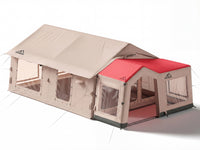
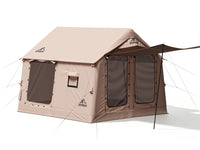
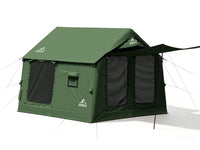
For example, the ZONKOO Lyra tent uses 420D Oxford fabric based on this balanced consideration: without significantly increasing weight or burden, it provides a more reliable foundation for abrasion resistance and waterproof compatibility, allowing the tent to remain stable after repeated use.

How to Understand Oxford Fabric Choices for Different Camping Styles
There is no single Oxford fabric specification that fits everyone—the key lies in how you use your tent.
-
Short trips or weekend camping:
Greater emphasis is placed on easy setup and comfort, and a medium-denier Oxford fabric is usually sufficient.
-
Family camping or multi-day trips:
With higher usage frequency and longer ground contact time, it’s more suitable to choose Oxford fabric with an extra margin in abrasion resistance.
-
Fixed campsites or repeated-use scenarios:
Fabric stability and long-term waterproof durability are often more important than lightweight performance.
Understanding this is far more valuable than simply comparing specifications.
Why Is Oxford Fabric Still a Mainstream Choice for Tent Materials?
Among the many tent fabric options, Oxford fabric has remained a mainstream choice over time, not because it has the most eye-catching specifications, but because it delivers stable and reliable performance in real-world use.
First, Oxford fabric achieves a good balance between durability, weight, and waterproof compatibility. It is not as prone to wear as overly thin fabrics, nor does it significantly increase the overall burden of a tent by pursuing excessive thickness, allowing it to adapt to a wide range of camping scenarios.
Second, from a long-term use perspective, Oxford fabric has relatively low maintenance requirements. Daily cleaning, drying, and storage are all more user-friendly, making it easier to keep the fabric in good condition.
More importantly, Oxford fabric works reliably with various waterproofing methods. Whether it’s PU coatings, seam sealing, or structural waterproof design solutions, it provides a dependable foundation. This is also a key reason why many tent brands continue to choose Oxford fabric in their product designs.
Common Questions About Oxford Fabric
-
Does a thicker Oxford fabric always mean a better tent?
Not necessarily. Whether a fabric is suitable depends on the use scenario, not simply on pursuing a higher denier number. Thicker fabric may offer better abrasion resistance, but it can also add weight and make packing more cumbersome.
-
Is 420D Oxford fabric suitable for camping?
For most camping scenarios, 420D Oxford fabric provides a solid balance between abrasion resistance, waterproof performance, and overall weight. It is reliable without negatively affecting the camping experience.
-
Does an Oxford fabric tent require special maintenance?
No complicated maintenance is needed. Keeping the tent dry, avoiding long-term sun exposure, and regularly cleaning surface dirt will help extend the lifespan of both the Oxford fabric and the waterproof coating
Understanding Fabric Matters More Than Memorizing Numbers
Tent fabric isn’t better simply because it’s thicker, nor is a tent more reliable just because the numbers are higher. What truly matters is whether the fabric matches your camping style.
Once you understand what Oxford fabric is, it becomes much easier to interpret the logic behind tent specifications. Compared to memorizing a string of numbers, choosing a fabric that fits your real use scenario often leads to a more stable and more reassuring camping experience.
👉 If you’d like to further explore how different fabrics and structures perform in real-world use, you can visit the ZONKOO tent page to view and compare different tent models and find the option that best suits your camping style.