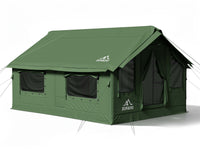
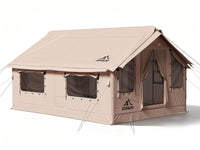
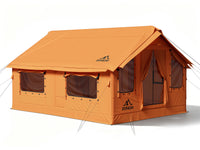
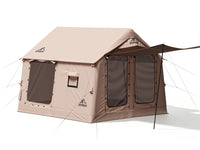
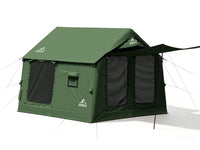
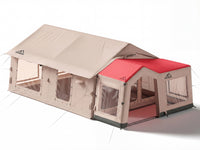
If your camping style is mainly family camping, car camping, or campground camping, then an inflatable tent is usually worth buying. Its biggest advantage is not the “inflatable” design itself, but the easier setup experience, more spacious interior, and better suitability for group camping and longer stays at the campsite.
Many people are first drawn to inflatable tents because of their “quick setup,” but the real factors that affect the buying decision are often price, durability, air leaks, wind and rain performance, and lifespan. This is especially true for families. A tent is not just a place to sleep. It also needs to hold kids, luggage, sleeping pads, gear storage, and temporary indoor space during rainy weather.
So, deciding whether an inflatable tent is worth buying should not only depend on whether it sets up faster than a regular tent. It should depend on whether it fits your real camping style. Next, we will look at these practical concerns, explore which camping scenarios inflatable tents are best suited for, and help you decide whether one is worth buying.
What Makes Inflatable Tents Different?
The biggest difference between inflatable tents and traditional pole tents is the support structure. Traditional tents rely on metal or fiberglass poles to build the frame, while inflatable tents use air beams as the main support system. During setup, you only need to spread out the tent, connect the pump to inflate it, and then secure the stakes and guy lines. The main tent structure can stand up quickly.
The word “inflatable” can easily make people think of pool floats or air mattresses, so many users worry that it may not be strong enough. In fact, inflatable tents for camping use air beam structures specifically designed to support the tent. What truly affects stability is not whether the tent is “inflatable,” but the overall structural design, proper setup, and whether the guy lines and stakes are secured correctly.
For beginners, the biggest advantage of this structure is not a sense of “technology,” but peace of mind. There is no need to repeatedly thread poles, assemble poles, or worry about installing poles in the wrong direction or missing parts. Especially when you arrive at the campsite in the evening, the weather changes suddenly, or you are camping with kids, a simpler setup process is often more valuable than saving just a few minutes.
Why Are Inflatable Tents Better Suited for Family Camping?
Once people actually start family camping, many quickly realize that a tent is not just about whether everyone can fit inside. Sleeping pads, luggage, lighting gear, changes of clothes, children’s items, and pet gear all take up space. When it rains or gets colder, the tent may also become a temporary resting area, changing area, or gear-organizing space. If the space is too tight, the camping experience can easily feel disrupted.
This is why inflatable camping tents are more popular among family camping and car camping users. For most families, space, easy setup, and comfort matter more than extreme lightweight design.
If your camping style is mainly driving to the campsite, tent weight still matters, but it usually is not the deciding factor. Instead of sacrificing living comfort just to save a few kilograms, it is often better to choose a tent with more space and easier setup. This difference becomes even more noticeable when camping with kids, friends, or more gear.

What Do Inflatable Tents Really Improve?
The most direct benefit of an inflatable tent is that it makes setup less stressful. After arriving at the campsite, one of the biggest concerns for many people is that it gets dark before the tent is ready. The inflatable structure reduces the steps of threading poles, matching connection points, and making repeated adjustments, allowing the main tent body to take shape more quickly.
Space is another difference that many users only truly notice after using one. It is easy to misjudge a tent by only looking at the “person capacity” label, because in real camping situations, both people and gear take up space. Once sleeping pads, backpacks, clothing, and lights are inside, whether there is still room to move around becomes the key factor that affects the overall experience.
Of course, inflatable tents are not made for every type of camping. They are usually not ultralight backpacking gear, and are better suited for car camping, family campsites, weekend camping, and group camping. If you mainly do long-distance backpacking, weight and packed size may matter more than interior comfort.
Are Inflatable Tents Really Durable and Reliable?
Many people worry most about durability when buying an inflatable tent for the first time. They often think, “If it is filled with air, will it be easy to damage?” In fact, what really affects a tent’s lifespan is often not the air beams themselves, but long-term friction, improper storage, and everyday usage habits. As long as you clear the ground before setup, avoid sharp rocks and branches, use a groundsheet when needed, and store the tent properly, an inflatable tent can fully meet the needs of family camping and regular campsite use.
Air leaks are also a common concern. Under normal conditions, as long as the valve is properly closed and the air beams are not damaged, an inflatable tent does not need frequent reinflation. After the temperature drops at night, the air pressure may change slightly, and the air beams may not feel as firm as they did during the day. This is normal and does not necessarily mean there is a leak. If there is only a small area of damage, it can usually be repaired and continue to be used.
As for whether inflatable tents can stay stable in wind and rain, the answer depends on more than the support structure. Whether it is an inflatable tent or a traditional pole tent, stability is also closely related to stakes, guy lines, setup direction, and the campsite environment. Rain performance also depends on the fabric, waterproof coating, floor design, and overall workmanship.
All ZONKOO inflatable tents feature a wind-resistant design, combined with waterproof fabric, PU coating, durable PVC flooring, and a stable air beam structure, making them better suited for family camping, car camping, and multi-day campsite use.

How Long Do Inflatable Tents Last?
A high-quality inflatable tent, when used and maintained properly, can usually last through multiple camping seasons. What truly affects its lifespan is not only the product itself, but also how often it is used, the weather conditions, inflation pressure, and storage habits.
In real camping use, many tents do not fail after one trip. They often wear down slowly because of long-term damp storage, sun exposure, ground abrasion, or improper inflation. To help your tent last longer, try to choose flat ground before setup, open it up and dry it after rainy trips, make sure the inside and bottom are dry before long-term storage, and regularly check the valves, air beams, and ground contact areas during use.
Instead of only asking “how many years can it last,” it is better to consider whether you are willing to use and maintain it properly. A tent is outdoor gear, and the longer you use it, the more basic care it needs.
Is the Price of an Inflatable Tent Worth It?
Inflatable tents usually cost more than basic traditional tents, so it is normal to hesitate before buying one. Whether it is worth the price should not be judged only by the first purchase cost, but by whether it can save time, reduce hassle, and provide a more stable living experience on every camping trip afterward.
If you only camp once a year, or only need a simple temporary sleeping space, an inflatable tent may not be the most cost-effective choice. But if you camp several times a year and often travel with family or friends, setup time, interior space, and comfort become much more important.
Many people think buying a tent means buying a place to sleep. In reality, family camping is more like buying an outdoor living space. This is where the value of an inflatable tent becomes clear: it makes setup easier, makes the tent interior more useful, and helps reduce crowding and disorder during group camping.
How to Choose the Right Inflatable Tent?
If you want to buy an inflatable tent, do not focus only on the “person capacity” label. In real camping situations, the number of people is only a basic reference. The amount of luggage, the length of your stay, whether you bring kids or pets, and whether you need activity space inside the tent will all affect the final experience.
For short weekend camping, beginners, or relaxed trips for two people, a smaller inflatable tent will be easier to carry and set up. Taking ZONKOO as an example, Lyra and Orion are better suited for these easy camping scenarios. They can meet basic sleeping and storage needs without adding too much setup pressure.
If you often travel with family, camp for multiple days, or bring more gear, a model with more space will be more suitable. Larger inflatable tents such as Vega, Draco, and Draco Plus are better suited for group camping, gear storage, or users who want the tent to be more than just a sleeping space.
So when choosing an inflatable tent, instead of only asking “How many people is it for?”, it is better to think first: Do you camp occasionally on weekends, or do you often go on multi-day trips? Do you only need basic sleeping space, or do you want the tent to become a more comfortable outdoor living area? This judgment is more accurate than simply looking at the number of people.
If you want to further compare different sizes and use scenarios, you can read:How to Choose an Inflatable Tent? A Comparison Guide to 5 ZONKOO Camping Tents
So, Are Inflatable Tents Worth It?
There is no single answer to whether inflatable tents are worth buying. It depends on your camping style. If you prefer lightweight hiking or long-distance backpacking, a traditional ultralight tent may be more suitable. But if most of your camping takes place at campgrounds, on car trips, or during family outings, the convenience, comfort, and space that an inflatable tent provides often make the investment more valuable.
Many people focus most on price and durability when they first consider an inflatable tent. But once you actually use one at a campsite, you will find that it solves more than just the setup problem. It also helps with space arrangement, gear storage, and overall efficiency during group camping. For users who value comfort, setup efficiency, and long-term use, a suitable inflatable camping tent can truly make camping easier.
If you have already confirmed that an inflatable tent fits your camping style, the next step is to choose the right model based on the number of people, space needs, and travel habits.