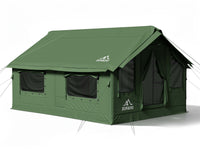
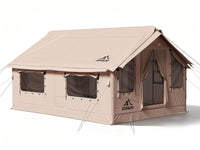
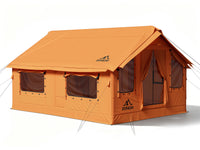
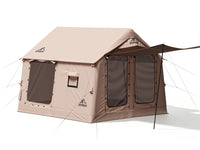
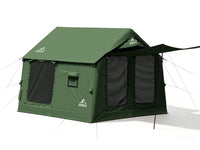
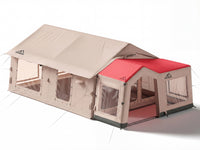
Canvas tents and inflatable tents each have their own advantages. Canvas tents are generally better suited for long-term stays, natural breathability, and a traditional camping experience, while inflatable tents are more suitable for family camping, car camping, weekend trips, and campers who need to set up and move camp frequently.
The choice depends on more than how many people a tent can sleep. Setup time, interior comfort, weather performance, packed weight, and maintenance after rain also matter. To decide which type is right for you, consider how long you stay at camp, how many people are traveling, how much vehicle space you have, and whether you have enough room to dry the tent. The following comparison looks at real camping use to help you decide whether a canvas tent or an inflatable tent better fits your needs.
What Is the Difference Between a Canvas Tent and an Inflatable Tent?
In common family camping settings, a canvas tent refers to a traditional tent made with canvas or polycotton fabric and supported by metal poles, center poles, or an external frame. An inflatable tent uses air beams instead of traditional poles and is usually made with synthetic materials such as Oxford fabric or polyester.
The differences involve both the fabric and the support structure, which affect setup, transportation, comfort, and maintenance. Traditional canvas tents are generally thicker and more breathable, making them suitable for long-term stays. Inflatable tents are easier to set up, more likely to offer spacious family-friendly interiors, and usually easier to clean and dry after rain.
Canvas Tent vs Inflatable Tent: Quick Comparison
|
Comparison |
Canvas Tent |
Inflatable Tent |
|
Setup Method |
Supported by traditional poles |
Supported by inflatable air beams |
|
Breathability |
Usually better |
Depends on windows and ventilation |
|
Interior Layout |
More traditional campsite layout |
Easier to create spacious interiors and separate areas |
|
Packed Weight |
Usually heavier |
Larger models can also be heavy |
|
Drying After Rain |
Takes longer to dry |
Synthetic fabrics usually dry faster |
|
Repair Method |
Sewing or canvas patches |
Locate the leak and repair the inner bladder |
|
Typical Use |
Long-term stays |
Family camping, car camping, and frequent campsite changes |
The comparison above provides a quick overview of the main differences between the two tent types. Next, we will look at how these differences affect setup, comfort, weather protection, and maintenance in real camping situations.
Which Tent Is Faster to Set Up?
When you arrive at the campsite on Friday evening, it may already be getting dark, while sleeping pads, tables, chairs, and dinner supplies are still in the car. At that point, the time needed to set up the tent can directly affect the pace of the first night.
Setting up a traditional canvas tent requires unfolding the heavier tent fabric first, followed by installing the center pole, door poles, or external frame. The larger the tent, the more likely two people will be needed to adjust the tent body and tension. An inflatable tent eliminates the need to connect poles one by one. After unfolding the tent, connect the pump, inflate the air beams to form the main structure, and then secure the stakes and guy lines.
If the tent will remain set up for a full week, the longer setup time of a canvas tent may have little impact. For weekend family camping or road trips with frequent campsite changes, however, an inflatable tent makes it easier to spend more time organizing camp, preparing meals, and resting. For couples and small families, small inflatable tents can also reduce the pressure of carrying and packing.
Which Tent Is More Comfortable?
Canvas fabric offers some natural breathability, allowing part of the heat and moisture to pass through the material. When exposed to sunlight during the day, the thicker fabric heats up more slowly. As temperatures drop at night, the interior also tends to change more gradually.
This breathability can help reduce condensation, but it cannot eliminate it. Nighttime temperature changes, humidity, the number of campers, and ventilation all affect moisture inside the tent. Even in a canvas tent, keeping the doors and windows closed for long periods can still lead to damp interior walls.
The comfort of an inflatable tent comes more from its space and layout. Air beams support the tent along the edges, making it easier to create a higher ceiling and a more usable interior area, with better organization for sleeping pads, luggage, and activity space. Some large inflatable tents, such as the ZONKOO Draco, also use dividers to separate sleeping and living areas, while large windows, skylights, and multiple entrances improve light and ventilation.
During several days of rain, a family may need to change clothes, organize luggage, or rest inside the tent. In this situation, it is important to have enough walkway and activity space after the sleeping pads are laid out. When choosing inflatable family tents, pay close attention to the actual floor area, standing height, sidewall angle, and interior layout.
Which Tent Offers Better Wind and Rain Protection?
The fabric, air beams, or poles alone cannot judge a tent’s performance in wind and rain. The main factors affecting stability include the overall shape, wind-facing area, support points, number of guy lines, strength of the stakes, and setup direction.
Canvas tents use thick fabric and, when combined with strong poles and a complete guy-line system, can remain stable in the same location. However, once the canvas absorbs water, it becomes noticeably heavier, making packing and transportation more difficult.
Inflatable air beams can flex during gusts and return to their original shape as the wind weakens, reducing some of the risk of rigid poles snapping. However, large tents have a bigger wind-facing area and may still move significantly if the guy lines are not properly tightened.
For rain protection, canvas tents mainly rely on the fabric itself and waterproof treatment. Inflatable tents usually use coated synthetic fabrics, sealed seams, groundsheet construction, and rain-resistant door and window designs. For example, the fabric used in ZONKOO inflatable camping tents has a PU5000mm waterproof rating, providing rain protection for family camping and multi-day campsite use. However, the waterproof rating should still be considered together with the seams, groundsheet, and overall structure.

Which Tent Is More Durable?
High-quality canvas offers good abrasion resistance. If a small area is torn, it can be repaired with stitching, canvas patches, and waterproof sealing materials. As long as there is no widespread rot, many types of damage are easy to identify.
The main concern with canvas tents is long-term moisture. Packing the tent before it is completely dry can lead to mold, odors, and fiber damage. These problems usually build up after repeated periods of damp storage.
The air beams in an inflatable tent are not made like the single-layer structure of an ordinary inflatable product. Common designs place a wear-resistant protective layer around the inner bladder. Small punctures can usually be repaired with a patch, while finding the source of the leak is often the most time-consuming part. Choosing the right campsite, avoiding sharp branches and rocks, and inflating the tent to the recommended pressure are more practical than simply worrying about air-beam leaks.
To learn more about how air beams, fabrics, and maintenance habits affect tent lifespan, continue reading: How Long Do Inflatable Tents Last? Durability, Repair & Care Tips.
Which Tent Is Easier to Transport and Pack?
Canvas tents require carrying heavy tent fabric, metal frames, stakes, and guy lines, resulting in a larger packed size. If the parking area is far from the campsite and the tent must be carried along a gravel path or slope, the weight difference becomes especially noticeable.
Inflatable tents do not require a complete traditional pole system, but a pump is still needed. Smaller models are relatively easy to handle, while larger family tents use more fabric, groundsheet material, and air beams, so they may not weigh less than standard pole tents.
For large inflatable tents in particular, the main advantage is simplifying the setup of a large structure rather than turning it into lightweight backpacking gear. Before buying, check the packed weight, storage size, campsite area, and carrying distance from the vehicle to the site.
Which Tent Is Easier to Maintain After Rain?
The fabric of a traditional canvas tent takes longer to dry after absorbing moisture. Even when the surface is no longer dripping, moisture may remain in the folds, seams, and bottom. Storing it for a long period without fully drying it can easily lead to mold and odors.
After packing up in the rain, returning to an apartment without a yard or enough space to fully unfold the tent is a real maintenance challenge for many campers. A canvas tent requires not only enough vehicle space for transportation but also sufficient room for drying.
Most inflatable tents use synthetic fabrics that absorb less water and are easier to wipe down and dry. The air-beam sleeves, areas around the valves, and folded sections still need to stay dry, but the overall maintenance time is usually shorter than with heavy canvas.
Which Tent Offers Better Long-Term Value?
Whether a tent is worth buying should not be judged only by the initial price. Setup time, frequency of use, repair methods, and ongoing maintenance also need to be considered. A lower-priced tent may not be a good value if it is rarely used because carrying, setting up, or drying it is too difficult.
High-quality canvas tents usually have a long service life and are relatively easy to repair when small areas become worn. For campers who stay in one place for long periods or take multi-day camping trips every year, their breathability and living comfort can provide value through continued use. However, they also require more time for cleaning, waterproofing, and drying.
Inflatable tents require a pump and basic repair tools, but their more straightforward setup process and relatively simple after-rain maintenance can make each trip easier. For families that often take weekend camping trips, the time savings apply not only to setup but also to packing up, cleaning, and organizing the tent after returning home.
Long-term value does not simply mean the longest lifespan or the lowest purchase price. The value of a canvas tent comes more from stable use during long-term stays with continued maintenance, while the value of an inflatable tent lies in making families more willing to go camping and making the tent easier to use regularly.
Which Tent Should You Choose for Different Camping Situations?
If you mainly take weekend family camping trips, travel by car, or need to move between campsites frequently, an inflatable tent is more suitable. It reduces the number of pole assembly steps and makes cleaning and packing after rain easier.
If you plan to stay at the same campsite for more than a week, or place more value on natural breathability and long-term comfort, a canvas tent is worth considering. Although setup and transportation require more effort, these costs are not repeated during a fixed stay.
If you often camp in wet or rainy conditions, you should also consider how you will dry the tent after returning home. When you do not have a yard or a large drying area, an inflatable tent made with synthetic fabric is usually more convenient. When sufficient drying and maintenance space is available, a canvas tent can also show its advantages for long-term use.
Canvas Tent or Inflatable Tent?
Choosing between a canvas tent and an inflatable tent comes down to which experience you are willing to spend more time on. A canvas tent requires more effort for setup, transportation, and drying, in exchange for natural breathability and long-term comfort. An inflatable tent makes family camping easier to begin through a more straightforward setup process and relatively simple maintenance.
The final comparison is not about which type looks more professional, but which one will be used more often and more easily after purchase. If an inflatable tent better fits your camping style, the next step is to choose the right size based on the number of campers, length of stay, and actual space needs.