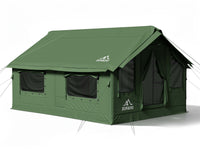
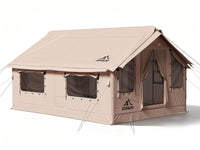
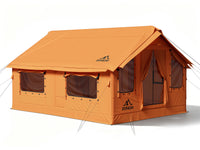
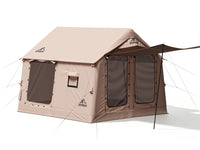
Small inflatable tents are a practical choice for couples, small families, and weekend car campers. They take up less room in the vehicle and at the campsite than larger family tents, while their inflatable frames eliminate much of the pole assembly required by conventional tents.
However, two tents designed for up to four people can still provide very different camping experiences. One may keep most of its usable space inside a single cabin, while another may use front and rear entrances and vestibules to separate outdoor gear from the sleeping area. Standing height, support structure, packed size, and fabric construction can also affect how convenient a tent feels once camp is set up.
The Zempire Aerospeed 4 and ZONKOO Lyra are both designed for couples and small families, and their prices are nearly identical. This comparison looks at their space, setup, portability, and weather-related features to show which camping style each tent suits best.
Zempire Aerospeed 4 vs ZONKOO Lyra Specifications
|
Comparison |
ZONKOO Lyra |
Zempire Aerospeed 4 |
|
Current Price |
$499.99 |
$500 |
|
Capacity |
1–4 people |
Comfortably sleeps 3, maximum 4 |
|
Main/Sleeping Area |
6 m² / 65 sq ft |
6.2 m² / 66.7 sq ft |
|
Vestibule Area |
No separate vestibule |
2.86 m² / 30.7 sq ft |
|
Tent Dimensions |
300 × 200 × 220 cm |
385 × 285 × 195 cm |
|
Interior Standing Height |
6′10″ / 208 cm |
195 cm |
|
Product Weight |
29 lbs / 13.2 kg |
21.5 lbs / 9.75 kg |
|
Packed Size |
23 × 14 × 16 in |
23.2 × 10.6 × 11.4 in |
|
Inflation/Setup Time |
3-minute setup |
2-minute inflation |
|
Tent Fabric |
210D Oxford fabric with PU coating |
75D Dura-Core ripstop polyester |
|
Floor Fabric |
420D Oxford fabric |
150D polyester with a 5000mm PU coating |
|
Waterproof Rating |
PU5000mm |
3000mm hydrostatic head; 5000mm floor |
Space Layout and Campsite Footprint
The Lyra provides 6 square meters of main interior space, while the Aerospeed 4 lists a 6.2-square-meter sleeping area. The difference between them is relatively small when the sleeping areas are considered on their own.
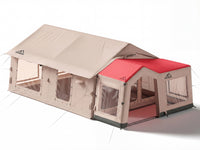
The Aerospeed 4 also includes front and rear vestibules with a combined area of 2.86 square meters. These covered spaces give campers somewhere to leave shoes, wet jackets, and some outdoor gear without bringing them into the sleeping area.
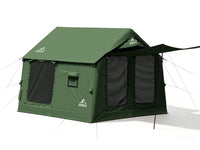
The Lyra does not have separate vestibules. Instead, it keeps its usable space within a simple, single-room interior, making mattresses and personal items easy to arrange in one place. Its shorter main body is also easier to position on a compact campsite where picnic tables, trees, parked vehicles, or other equipment limit the available space.
The Lyra has an interior standing height of 208 cm, compared with 195 cm in the Aerospeed 4. That additional headroom makes it easier to stand, change clothes, arrange bedding, and move around inside.
The Aerospeed 4 offers slightly more dedicated sleeping space and adds separate covered storage outside the inner tent. The Lyra uses a more compact footprint and provides greater standing height inside the main cabin. Which layout works better depends on whether you value separate gear-storage areas or easier placement on a smaller campsite.
Entry and Ventilation Design
The Aerospeed 4 has doors at both the front and rear, giving campers two ways to enter and leave the tent. This can be useful when several people are sharing the space, especially when someone needs to get out early in the morning or during the night without stepping across bedding and equipment.
The vestibules also provide sheltered transition areas for opening the doors and changing shoes in wet weather.
Its double-wall construction uses mesh windows, upper vents, and openings on several sides to support airflow. In mild conditions, more of the mesh can be left exposed. When temperatures drop or rain arrives, the outer tent and window covers provide additional shelter.
The Lyra uses a simpler single-room layout. Mesh windows on both sides, windows beside the door, and roof vents allow air to move through the interior. Its taller cabin also leaves more room above the sleeping area for warm air to rise.
The Aerospeed 4 suits campers who value two entrances, sheltered vestibules, and airflow from several directions. The Lyra keeps its doors and windows around one main cabin, making access and interior organization more straightforward without requiring separate entry areas at both ends.
Setup Structure and Steps
Both tents use inflatable air beams as their main support, reducing the amount of traditional pole assembly required at the campsite.
The Lyra has a listed setup time of 3 minutes. Once the tent is unfolded and the main structure is inflated, the remaining steps involve securing the stakes and adjusting the guylines.
The Aerospeed 4 has a listed inflation time of 2 minutes and also uses two aluminum brow poles. After inflation, these poles must be installed to shape the front and rear entrances and support the vestibules.
The difference is therefore not simply one minute. The Aerospeed 4 combines air beams and brow poles to create its two vestibules, while the Lyra relies mainly on its inflatable frame to form the main tent body.
Both designs reduce the work involved in pitching a conventional pole tent. The more useful distinction is whether you want the extra vestibule structure or prefer a more direct main-body setup.

Weight and Packed Size
The Lyra weighs 29 pounds, while the Aerospeed 4 weighs 21.5 pounds. Both are intended primarily for car camping and are easier to move from a vehicle to a nearby campsite than larger family inflatable tents.
The Aerospeed 4 prioritizes lower weight and a smaller packed profile. Its packed length is close to the Lyra’s, but its packed width and height are smaller. This can make it easier to fit alongside mattresses, chairs, a cooler, and other camping equipment in the vehicle.
At 29 pounds, the Lyra remains manageable for short carries when the vehicle is parked near the campsite. Rather than minimizing weight, its design prioritizes standing height, a simple single-room interior, and a heavier floor specification.
The Aerospeed 4 is easier to handle when the tent must be loaded frequently, carried upstairs for storage, or moved farther from the parking area. The Lyra is better suited to trips where the vehicle can remain close to the campsite and interior height or a compact campsite footprint matters more.
Neither tent is designed for long-distance backpacking. Both are intended for vehicle transport and campground use.
Further Reading: Want to compare more small inflatable tents for two-person camping? Read Best 2 Person Inflatable Camping Tent in 2026: 3 Popular Options Compared.
Fabric, Floor, and Weather Protection
The Lyra uses a PU-coated 210D Oxford fabric tent body and a 420D Oxford fabric floor. The Aerospeed 4 uses a 75D Dura-Core ripstop polyester fly, a breathable inner tent, and a 150D polyester floor with a 5000mm PU coating.
Denier describes yarn density rather than the overall durability or waterproof performance of a finished fabric. A higher denier does not, by itself, prove that one tent will be more durable or perform better in rain.
The Lyra uses a heavier 420D Oxford floor, giving it a more substantial floor specification for repeated campground use. Campers using cots or hard-sided storage boxes should still protect pressure points and keep sharp edges away from the floor.
The Aerospeed 4 uses a lighter 150D floor and pairs it with a bathtub-style design intended to reduce the chance of ground moisture reaching the sleeping area.
The Lyra has a PU5000mm waterproof rating and taped seams. The Aerospeed 4 has a 3000mm hydrostatic-head rating, while its floor is rated to 5000mm. Because the tents use different fabrics and construction methods, these figures should not be treated as a complete measure of rainy-weather performance.
Seam construction, door and window coverage, floor design, pitch tension, and campsite drainage all affect how a tent handles wet conditions. The Lyra uses higher-denier fabrics within a single main structure, while the Aerospeed 4 combines a rainfly, inner tent, vestibules, and a bathtub-style floor.
Whichever tent you use, avoid low areas where water can collect, secure all stakes and guylines, and allow the tent to dry fully before packing it away.
Price and Overall Configuration
The two tents are priced within nearly the same range, but their designs serve different camping priorities.
The Aerospeed 4 prioritizes lower weight, compact storage, front and rear doors, dual vestibules, and double-wall construction. It suits campers who want easier transport and separate sleeping and gear-storage areas.
The Lyra keeps its space within a more compact main body and provides an interior standing height of 208 cm. Its inflatable frame, heavier floor specification, and simpler door and window arrangement make it easier to use on smaller campsites and simpler to organize as a single living space.
The choice is not simply between a larger tent and a lighter one. The Aerospeed 4 is built around portability and separate storage areas, while the Lyra prioritizes standing height, a simple single-room interior, and easier placement on a compact campsite.
How Do You Choose Between the Zempire Aerospeed 4 and ZONKOO Lyra?
The Zempire Aerospeed 4 and ZONKOO Lyra are both suitable for couples, small families, and weekend car camping. Both reduce conventional pole assembly and provide enough sleeping room without requiring the footprint of a large family tent.
The Aerospeed 4 is the stronger fit when packed weight, storage size, and gear separation matter most. Its front and rear doors make access easier when several people share the tent, while the vestibules provide covered space for shoes, wet jackets, and some equipment outside the sleeping area. It is particularly useful when the tent must be carried farther from the vehicle or when keeping sleeping gear separate from outdoor equipment is a priority.
The Lyra is better suited to smaller or irregularly arranged campsites where standing height and easy placement matter more. It keeps its usable space within one main cabin, does not require additional ground length for vestibules, and is easier to arrange around picnic tables, vehicles, and other camping equipment.