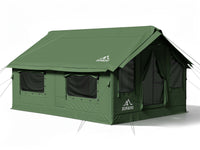
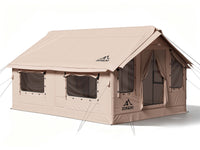
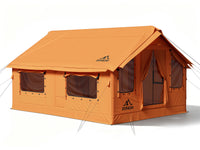
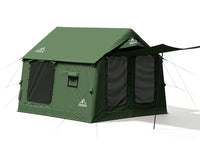
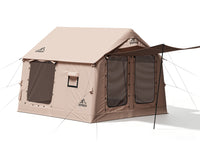
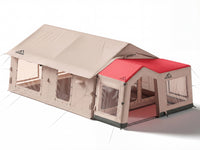
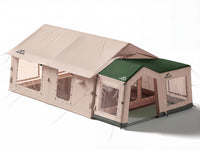
An insulated tent uses insulation to slow heat loss, while a hot tent can use a compatible wood stove to provide active heat. The main difference is how they provide warmth, but the two designs are not mutually exclusive. Some tents combine insulation with a stove-compatible design.
For winter camping, if you mainly use the tent for overnight stays, you may not need a wood stove. If you plan to spend long periods inside the tent in cold weather, active heating can be more useful. However, a wood stove also requires extra equipment and careful handling, so the right choice depends on the weather and how you plan to camp.
What Is the Difference Between an Insulated Tent and a Hot Tent?
What is an insulated tent?
An insulated tent typically uses an insulated liner, insulation materials, or a specially designed multilayer structure to reduce heat transfer between the inside and outside of the tent.
It can slow heat loss but cannot generate heat on its own. A standard double-wall tent is not necessarily an insulated tent; its actual performance depends on its insulation design.
What is a hot tent?
A hot tent is designed to accommodate a compatible tent stove. It typically has a dedicated stove jack that allows the chimney to pass through the tent fabric and vent smoke outside as intended.
A hot tent can provide active heat from a wood stove, but it does not necessarily have built-in insulation.

Insulated tent vs. hot tent: key differences
|
Feature |
Insulated Tent |
Hot Tent |
|
Additional equipment |
No dedicated stove required |
A compatible stove, chimney, and fuel are needed for heating |
|
Setup complexity |
Depends on the tent's design |
Requires additional stove setup and management |
|
Main limitation |
Cannot generate heat on its own |
Requires fire safety precautions and fuel management |
|
Best suited for |
Campers who want to reduce heat loss |
Campers who need active heat inside the tent |
Which Tent Is Warmer for Winter Camping?
When using a wood stove, a hot tent is generally warmer than an insulated tent without an active heat source. Without a stove, an insulated tent with effective insulation is generally better at retaining existing heat.
With a wood stove: hot tents provide more warmth
A wood stove supplies heat to the tent, creating a warmer environment for activities in cold weather. Under otherwise similar conditions, active heating can raise the interior temperature more effectively than insulation alone.
However, the actual temperature increase depends on the stove's heat output, tent size, insulation performance, and outdoor conditions. There is no single temperature difference that applies to every hot tent.
Without a wood stove: does an insulated tent have an advantage?
If two tents are similar in size, ventilation, and other design features, a tent with effective insulation will generally slow heat loss better than a hot tent without insulation.
However, without a continuous heat source, the interior temperature will gradually approach the outdoor temperature. In a hot tent that relies on a wood stove for heat, the temperature advantage will also fade after the fire goes out.
In short, a hot tent with a compatible wood stove offers a greater heating advantage when active heat is needed. If you don't plan to use a stove, an insulated tent is generally worth considering, though its actual insulation performance still matters.
How Do Insulated Tents and Hot Tents Differ in Everyday Use?
Setup and equipment
Setup requirements for insulated tents depend on their design. Some models require an additional insulated liner, but generally do not involve stove installation.
When using a wood stove in a hot tent, you'll also need to install the chimney and heat-protection components and prepare fuel. This usually means more setup steps.
Weight and transport
Insulation materials can add weight and bulk to a tent, but an insulated tent does not require a separate wood stove system.
A hot tent setup that uses a stove must account for the combined weight of the stove, chimney, and fuel. Even if the tent itself is lightweight, the complete setup may be heavier and take up more space.
Ventilation and condensation
Both insulated tents and hot tents can develop condensation, but the factors involved may differ.
- Insulated tents: Effective insulation may reduce condensation on some interior surfaces, but moisture from breathing and damp clothing still needs to escape through ventilation.
- Hot tents: Stove heat may help reduce dampness in some items, but it does not eliminate condensation. Proper ventilation and exhaust are still required when using a stove.
With either type of tent, maintain the required ventilation, keep wet clothing separate from sleeping gear, and let the tent dry thoroughly before storing it.
What Should You Know About Using a Wood Stove in a Hot Tent?
A stove jack does not mean that a tent can accommodate any wood stove. Before use, confirm that the tent, stove, chimney, and protective components are compatible.
Keep these precautions in mind:
- Equipment compatibility: Use only stoves and accessories approved by the manufacturer. Do not modify a standard tent to install a stove.
- Safe clearances: Maintain the required distances between the stove and chimney and the tent fabric, air beams, bedding, and other combustible materials.
- Ventilation and exhaust: Ensure that airflow and exhaust meet the required conditions to reduce the risk of carbon monoxide poisoning.
- Fire management: Keep the stove under supervision while it is operating. Do not leave a burning stove running while people are asleep. Before going to bed, follow the stove manufacturer's instructions for shutting it down and handling any remaining embers.
- Campground rules: Check in advance whether the campground permits wood stoves or other solid-fuel equipment.
Use a suitable carbon monoxide alarm and fire-safety equipment according to the equipment instructions. An alarm does not replace proper installation and ventilation.
Further Reading: Can You Use a Heater in the Tent? Safety Rules Campers Need to Know

Should You Choose an Insulated Tent or a Hot Tent for Winter Camping?
The key factor is not how many days you plan to camp, but whether you need active heat inside the tent.
Mainly sleeping in the tent: consider an insulated tent
If you mainly use the tent for sleeping, spend most of the day outdoors, and do not plan to use a wood stove, an insulated tent with effective insulation may be a suitable choice.
This option may suit occasional short camping trips, campers who want to carry less gear, or those who are unfamiliar with stove operation. Before buying, confirm that the tent can handle the expected weather conditions.
Spending long periods inside: consider a hot tent
If the weather is cold and you need to spend long periods inside the tent changing clothes, resting, organizing gear, or waiting for weather conditions to improve, a hot tent with a compatible wood stove can provide a warmer environment.
This option is better suited to campers who stay at established campsites, can transport a stove and fuel, have experience operating the equipment, and camp where wood stoves are permitted.
Choose the Right Tent for Your Next Winter Camping Trip
Insulated tents and hot tents suit different camping needs, and neither is the right choice for every winter camping situation. Rather than focusing only on which tent is warmer, first determine whether you need active heat, then choose based on the weather, camping style, and equipment requirements.