The tricky part of group camping usually isn’t bringing a few extra tents. It’s sharing one campsite with several people or families whose schedules, interests, and sleeping habits may be completely different. Some people turn in early, while others want to stay up and talk. Some may head out first thing in the morning for a hike or a day of fishing, while others would rather take it slow around camp.
A good group camping trip doesn’t require everyone to follow the same schedule. What matters is getting a few shared decisions out of the way before you leave: who’s coming, where everyone will sleep, whether the campsite has enough room, what the group will share, and who will take care of each common task. Once those basics are settled, everyone has more freedom to enjoy the trip at their own pace.
Confirm Group Size, Sleeping Arrangements, and Activities
Before booking a campsite, get a clear picture of the group. Ten people camping together doesn’t necessarily mean all ten will arrive, stay, and leave at the same time.
Confirm Group Size and Length of Stay
Start with the actual number of people coming and how many nights each person plans to stay. Some may arrive Friday evening, while others may not join until Saturday. Departure times can vary too.
Different schedules are fine. As long as shared meals, main activities, and general meeting times are agreed on ahead of time, there’s no reason to force everyone into the same itinerary just because it’s a group trip.
Decide Who Will Sleep Together
Family members can usually share a tent, while friends may need to think more about sleep schedules, privacy, and nighttime movement. When several people share one tent, consider how much room will remain once mattresses, sleeping bags, and luggage are actually inside.
Someone who goes to bed early, gets up frequently during the night, or simply wants more personal space may be more comfortable in a separate tent. The main question at this stage is who will sleep together and how much space each sleeping group needs. From there, it becomes much easier to work out how many tents to bring.
Set the Budget in Advance
It’s also best to sort out costs before anything is booked.
Campsite fees, shared supplies, and a few group meals can be split among the group, while personal gear and individual activities can be paid for separately. If someone drops out, decide ahead of time how any booking costs that have already been paid will be handled.
By this point, the group size, length of stay, sleeping arrangements, main activities, and budget should all be fairly clear. That gives you a much better idea of how much campsite space you’ll actually need.

Choose a Campsite That Fits the Group
The “maximum occupancy” listed for a group campsite only tells you how many people are allowed to stay there. It doesn’t tell you whether the site can comfortably fit everyone’s tents, vehicles, and gear.
Beyond the tents themselves, tables, chairs, vehicles, canopies, gazebos, stakes, and guy lines all take up room. With a larger group, those extras can quickly use more space than expected.
What to Check Before Booking
When reviewing a campsite, look at:
- Maximum group size
- Tent limits
- Vehicle limits and parking rules
- Actual space available for tents
- Whether the site has designated tent pads
- Whether canopies or gazebos are allowed
- Restroom and potable water locations
- Pet, fire, and generator rules
- Quiet hours
- Check-in, deposit, and cancellation policies
These details often tell you more about whether a campsite will work than the listed occupancy alone.
Match Campsite Amenities to the Group
Once the sleeping arrangements are clear, think about how well the campground itself suits the people coming along.
For older adults, young children, or first-time campers, the distance to restrooms and potable water may matter far more than recreational amenities. If pets are coming too, check where they’re allowed and whether the campground has any additional restrictions. Different groups need different things, so the best campsite isn’t necessarily the one with the longest amenity list. It’s the one whose facilities make the trip easier for the people who are actually going.
Look at the Campsite Layout
Two campsites with the same amount of space can work very differently depending on their shape.
A large, open area may be better for bigger tents and a central gathering space, while several separate tent pads can make more sense for multiple families. When looking at the campground map, picture where the vehicles, tents, and shared area are likely to go.
If everyone is arriving at different times, having someone who knows the overall plan arrive first can make setup much smoother. Once the shared area and main walkways are established, later arrivals are less likely to pitch a tent somewhere the rest of the group needs to pass through.
Plan Sleeping, Activity, and Cooking Areas
When several people share one campsite, the biggest issue is often not a lack of space, but too many different activities competing for the same space.
People who are sleeping need quiet. People who are talking need somewhere to sit. Cooking brings extra foot traffic, food, and gear into the mix. Giving each of these activities its own area makes the campsite much easier to use.
Sleeping Area: Leave Room for Real Rest
Group camping doesn’t mean everyone needs to sleep in one large tent.
A family or people with similar schedules can share a tent without much trouble, but when several families camp together, separate sleeping spaces are often more comfortable. People who stay up late, early risers, and anyone who frequently comes and goes during the night can share a tent or stay in nearby tents to reduce disruptions between people with different routines.
Once the sleeping groups are decided, place the tents with those routines in mind. Tents for people who need more quiet can sit farther from the shared activity area, while anyone who expects to come and go frequently or leave early can stay closer to the main walkway.

Shared Area: Give Everyone a Place to Gather
Outside the sleeping area, it helps to have one place where everyone can spend time together.
For a small group in stable weather, a few tables and chairs may be enough. For a multi-day stay, or when sun and rain are likely, some kind of covered space becomes much more useful. Meals, conversations, and gear organization can all happen there instead of spilling into the sleeping tents.
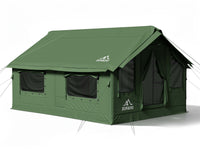
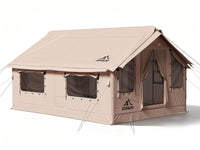
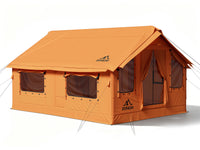
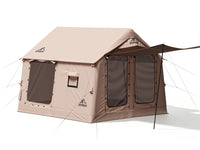
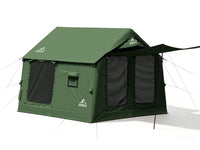
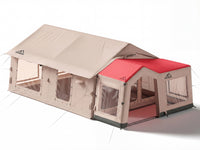
For groups that need more shared space, a large inflatable tent such as the ZONKOO Draco Plus offers 252 sq ft of total usable space. The main tent can be divided into two areas with a removable divider, making it easier to organize beds, luggage, and group gear. The attached gazebo gives tables, chairs, meals, and daytime supplies their own place. If someone turns in early, everyone else still has somewhere to sit and talk. When the sun is strong or rain moves in, the group doesn’t have to crowd into the sleeping area.
Several families don’t all need to sleep inside the Draco Plus, either. Each family can keep its own sleeping tent and use the gazebo as the campsite’s shared gathering space. That keeps sleeping areas separate while still giving the group one consistent place to come together.
Draco Plus
Cooking Area: Keep It Clear of Main Walkways
The cooking area doesn’t need to be far from the rest of the camp, but it shouldn’t sit directly in front of tent entrances or block routes people use throughout the day.
Food, trash, and other scented items should be stored according to campground rules instead of being kept inside sleeping tents by default.
Once everything is set up, walk through the campsite and see how it actually works. Are nighttime conversations too close to a sleeping tent? Is a vehicle blocking the way? Can people still move through camp while someone is cooking? A layout that works in practice matters more than one that only looks organized on a map.
Divide Gear, Meals, and Responsibilities
One of the most common group camping mistakes is assuming someone else will bring an item that everyone knows the group needs.
That’s why shared supplies are better assigned to specific people instead of being left on a general group checklist.
|
Item |
Suggested Plan |
|
Personal gear |
Each person brings their own clothing, sleeping bag, toiletries, medications, and other personal items |
|
Shared gear |
Assign someone to bring tables, chairs, stoves, cookware, lighting, drinking water, and first-aid supplies |
|
Group meals |
Coordinate the main shared meals and let everyone handle the rest individually |
|
Transportation |
Confirm vehicles, passengers, and who will carry larger shared gear |
|
Arrival |
Decide who will arrive first and confirm the campsite layout |
|
Departure |
Assign responsibility for shared gear, food, trash, and a final campsite check |
Anyone responsible for shared gear should check their assigned items before departure to make sure everything is packed and working properly. For group meals, confirm how many people will be eating and whether anyone has allergies or other dietary needs. Breakfast, snacks, and food for activities away from camp can usually be handled individually.
If people are leaving from different locations, work out the vehicle arrangements as well, especially which vehicle will carry bulkier items such as tables, chairs, cookware, and other shared gear.
The point isn’t to divide every job evenly. It’s to make sure nothing important is left without an owner.
Confirm the Final Plan Before Leaving
As the trip gets closer, pull all the confirmed details together in one place.
Don’t leave the campsite address buried in one message, the stove assignment in another, and payment details somewhere else entirely. With a larger group, it’s easy for someone to miss a key piece of information.
Send the Key Details in One Message
Include:
- Campground address and campsite information
- Check-in and departure times
- Sleeping arrangements
- Vehicles and passengers
- Shared gear assignments
- Group meals
- Main activities and meeting times
- Shared costs and payment status
- Weather forecast
- Emergency contact
- Nearest medical facility
- What to do if the weather changes, roads close, or someone cancels
A quick review before leaving gives everyone a chance to confirm where they’re going, what they’re bringing, who they’re traveling with, and whether any payments or responsibilities still need attention.
Leave Some Time for Separate Activities
A group camping trip doesn’t need to be packed with shared activities from morning to night.
Everyone might meet for dinner, go on a hike together, and spend the evening talking in the shared area. The rest of the time, some people may go fishing, some may stay at camp with the kids, and others may simply sit back and enjoy the scenery.
A comfortable group camping trip isn’t about keeping everyone on the same schedule. It’s about organizing the things that need coordination so everyone can spend time together while still having the freedom to follow their own plans.