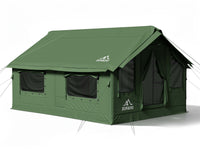
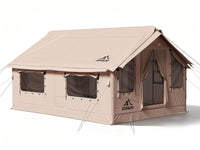
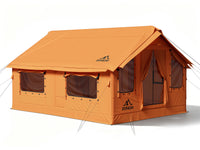
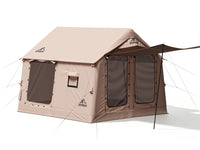
When camping with a dog, the most stressful part is often not setting up the tent, but sharing the space once camp is set up. The dog bed blocks the entrance, so everyone has to step around it. The water bowl has barely been set down before the dog turns around and knocks it over. At the slightest sound outside, the dog rushes toward the mesh door. A tent that looked spacious at first can quickly feel crowded.
That is why choosing a tent for a dog involves more than simply adding one more camper to the capacity. A dog needs more than a place to sleep. It also needs room to turn around, walk toward the entrance, drink water, and settle down comfortably. Whether the floor and air beams can handle everyday contact, whether the interior is easy to organize, and whether the doors and windows provide ventilation and make entry and exit easier to manage will all affect the camping experience.
A good inflatable tent for camping with a dog should feel like a well-organized temporary cabin: people can sleep comfortably, the dog has a fixed resting area, supplies do not block the walkway, and opening the door does not create an immediate escape risk.
Consider Your Dog’s Behavior Before Choosing a Tent Size
Before choosing a tent, consider how your dog behaves in an unfamiliar environment. Dogs that dig at their beds, scratch doors, chew fabric, or react strongly to sounds outside place greater demands on the tent material, walking paths, and entrance setup. Even a small dog may need a stable resting area and enough room to move comfortably.
Next, consider the dog’s size and the number of dogs coming with you. A small dog that settles down calmly has relatively simple space needs. A medium or large dog needs more room to lie down and turn around, and it is more likely to bump into sleeping pads, water bowls, or luggage when getting up at night. When traveling with two dogs, you also need to consider whether they can calmly share the same resting area.
The length of the trip also affects how much space you need. A short camping trip requires fewer pet supplies, while a multi-day stay calls for additional room for dog food, drinking water, wet towels, and cleaning supplies.
When choosing inflatable camping tents, the advertised sleeping capacity should only be used as a starting point. What matters is whether the tent still has a clear walkway after the sleeping pads, dog bed, and necessary equipment are inside.
Two people camping with a small dog can start with a three- or four-person tent. A medium or large dog, more equipment, or a longer stay may require a tent designed for four or more people. The final choice should also depend on the size of the dog bed and how you plan to arrange the interior.

Can Dog Claws Damage the Floor and Air Beams?
When using an inflatable tent with a dog, the floor is often more likely to show wear before the air beams. When a dog enters and leaves the tent, turns around before lying down, or digs at its bed, its claws repeatedly rub against the entrance, the area around the dog bed, and the main walkway. Dirt and small stones carried in on its paws can also increase fabric wear.
The internal air bladder is not exposed inside the tent. It is protected by an air-beam sleeve and the surrounding tent fabric. When a dog walks normally, turns around, or occasionally brushes against the sidewall, it generally will not directly damage the internal bladder. Some ZONKOO inflatable tents also use durable, scratch-resistant fabrics that can better handle light friction and scratching from normal pet activity.
However, scratch resistance does not mean the tent cannot be scratched or chewed through. Long nails, repeated digging in the same area, or chewing on the tent wall can still damage the floor, outer fabric, or internal air beam. Trim your dog’s nails before the trip, clean dirt from its paws, and place protective mats under the dog bed and near the entrance.
If the floor develops a small tear, clean and dry the area before applying a patch suitable for the floor material. If an air beam gradually becomes soft, first check the valve, then locate the leak and repair it according to the product instructions.
Further reading: Worried that scratches, leaks, or everyday wear could affect the life of your tent? Read “How Long Do Inflatable Tents Last? Factors That Affect Tent Life and Maintenance Tips” to learn more about air-beam repairs and tent care.
Air-Beam Structures Make the Interior Easier to Arrange
A tent’s support structure directly affects how the interior can be used. Tents with a center support pole or internal frame require space around those supports, so the dog bed, sleeping pads, and luggage must be arranged accordingly.
Inflatable air tents use air beams instead of traditional rigid poles, so the main activity area does not require a center support pole. This creates a more open floor area and makes it easier to separate the dog bed, sleeping area, and equipment based on how you use the space.
For camping with a dog, a more open floor layout also means leashes, towels, and small items are less likely to become wrapped around support poles. The dog has a clearer path when getting up at night or walking toward the entrance.
Plan for the Dog’s Entire Movement Path
When camping with a dog, you need more than a space that is just large enough for the dog bed. You also need a clear path between the dog bed and the entrance.
If the dog bed is placed directly next to the door, people have to step over the dog every time they enter or leave. If it is placed at the back of the tent, the dog may walk across sleeping pads and luggage when getting up at night. A better position is near family members while still leaving some distance from the entrance, water bowl, and main equipment area.
When choosing inflatable family tents, it can help to sketch the interior layout first: where the sleeping area will go, how much room the dog bed needs, where the luggage will be stored, and whether the entrance will still have a clear walkway. Even if the tent can technically sleep everyone, it may still feel crowded if these areas overlap.
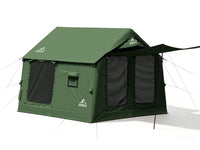
Tents with dividers or separate zones are more practical for families camping with a dog or staying for several days. For example, the ZONKOO Draco uses a two-room layout that allows the sleeping area to be separated from the dog bed, dog food, towels, and cleaning supplies.
The divider is not meant to isolate the dog. It helps keep water bowls, wet fur, and dirt away from the main sleeping space and makes the interior easier to organize when several people are camping with a dog.
Consider Ventilation, Entrances, and Transition Space
When people and dogs share a tent, heat, moisture, and odors increase. Even a large tent can feel stuffy at night if air cannot move continuously. When choosing a tent, do not only count the windows. Check whether doors and windows on different sides can create cross-ventilation.
Side windows, skylights, upper vents, or low vents positioned in different directions can be adjusted according to the wind, allowing heat and moisture to leave the tent more quickly. Two entrances can also improve airflow while reducing crowding when people, pets, and equipment are moving through the same doorway.
However, more entrances require a clearer entry routine. One door can serve as the main entrance, while the other is used mainly for ventilation and kept zipped closed. Mesh doors provide airflow and insect protection, but they should not be relied on to prevent escape. Control the dog or attach the leash before opening the door so it cannot suddenly run outside.
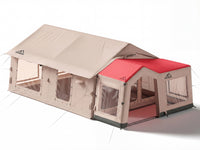
In rainy, muddy, or long-stay camping conditions, it is also useful to have a transition area for cleaning the dog and organizing equipment before entering the sleeping space. A tent with a gazebo or front room can be used for wiping paws, storing the leash, and temporarily holding wet towels or muddy gear.
The ZONKOO Draco Plus is one example of a tent with this type of extended layout. Its gazebo can serve as an organizing area before entering the main tent. However, an open area cannot replace a pet enclosure. A dog staying there still needs to be leashed or supervised.

Let Your Dog Practice at Home Before the First Trip
Whether a tent is suitable for a dog cannot be determined by specifications alone. Before the first camping trip, it is best to let the dog spend a short period inside the tent at home or in the yard.
Set up the tent and place the dog’s usual bed or blanket inside. Allow the dog to explore on its own. Watch whether it scratches the door, chews the sidewall, repeatedly looks for an exit, or becomes nervous because of the pump noise or the tent shifting or moving.
If the dog tends to rush through an open door, practice a waiting command in advance. If it likes to dig at its bed, place a protective mat underneath. If it is sensitive to outside sounds, begin with ten or fifteen minutes and gradually increase the amount of time spent inside.
Keep the dog bed, water, and supplies in similar positions each time. Familiar smells and a consistent layout can help the dog recognize its resting area more quickly and reduce repeated movement at night.
Even if the dog behaves calmly during the practice session, it should not be left alone in a tent at the campsite. Wildlife, other pets, thunderstorms, or sudden noises can cause scratching, barking, or escape attempts.
Choose a Tent Where Both People and Dogs Can Stay Comfortably
When choosing a tent for camping with a dog, the goal is not simply to find the largest possible space. The dog bed, sleeping pads, pet supplies, and walking paths should all fit without interfering with one another. Scratch-resistant fabrics, protected air beams, an open interior, clear zones, and multidirectional ventilation can reduce crowding and disorder when people and dogs share the same tent.
After choosing the tent, prepare according to your dog’s habits. Trimming its nails, protecting the floor, and practicing at home can reduce scratching, knocked-over water bowls, scattered gear, and sudden attempts to rush through the door, while helping the dog adjust more quickly.
On your next trip, you should not have to hold the water bowl with one hand while chasing a dog rushing toward the entrance with the other. Choose an inflatable tent with a more practical layout so you and your dog can both relax and enjoy the campsite.