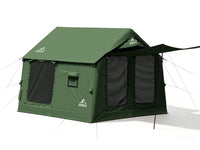
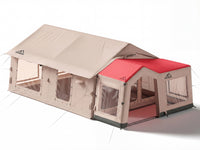
Long-term family camping places different demands on a tent than a weekend overnight trip. Once the tent is set up, mattresses, clothing, storage bins, and camping furniture begin to take up permanent space. Family members also need room to change clothes, relax, and organize gear each day. Weather changes, frequent foot traffic, and ongoing wear become more noticeable the longer you stay.
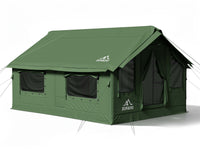
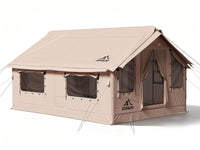
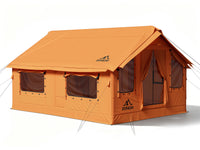
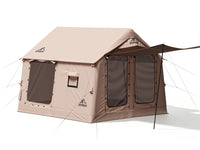
The Zempire Evo TL V2 and ZONKOO Draco are both large inflatable family tents with a maximum capacity of 10 people and similar interior heights. The real differences come down to how they organize space, manage ventilation, handle setup and transport, use materials, and protect against changing weather. For families planning to stay at one campsite for several days, these factors matter more than simply asking how many people the tent can sleep.
Zempire Evo TL V2 vs ZONKOO Draco Specifications Comparison
|
Comparison |
Zempire Evo TL V2 |
ZONKOO Draco |
|
Capacity |
Sleeps 5 comfortably / 10 maximum |
2–10 people |
|
Tent Area |
18.7 m² / 202 sq ft |
17 m² / 183 sq ft |
|
Interior Height |
86.6 in |
87 in |
|
Doors & Windows |
3 doors with 3-way windows, a rear window, and skylights |
1 door and 12 windows, including 4 skylights, 2 small side windows, 2 large side windows, 2 door-side windows, and 2 rear windows |
|
Weight |
69 lb 4 oz |
152 lbs |
|
Inflation / Setup Time |
3-minute air-beam inflation |
16-minute full setup |
|
Tent Fabric |
150D Poly-Oxford |
300D Stretch Oxford Fabric with PU coating |
|
Floor Material |
14 × 14, 180 gsm PE |
PVC-coated mesh fabric |
|
Air Beam Material |
Tri-Wrap Air Tubes |
PVC-coated mesh fabric |
|
Waterproof Rating |
6,000 mm |
PU5000 mm |
|
Current Price |
$1,500.00 |
$1,699.99 |
Space for Long-Term Living
The Evo TL V2 offers 202 sq ft of space, including a 109 sq ft living area and an 81.2 sq ft sleeping area. Two removable dividers can split the sleeping area into one to three rooms. For longer stays, this layout makes it easier to establish a clear routine: the front remains a shared living space, while the rear can be divided into bedrooms or used partly for clothing and luggage. A 52.3 sq ft vestibule at the front also provides space for meals or sitting outside without taking over the main sleeping area.
The Draco has 183 sq ft of interior space, no center pole, and a removable divider that creates a two-room layout. Because the living and sleeping areas are not fixed, mattresses, storage bins, and furniture can be arranged around the actual number of campers. Families with younger children can keep a larger shared area, then add separation when more privacy is needed. Its 87-inch interior height also allows adults to stand while changing clothes or making the bed without constantly bending over.
Both tents can work well for extended family stays, but they organize space differently. The Evo TL V2 provides more defined living and sleeping zones, while the Draco keeps the interior more open and lets families decide how each area will be used.
Natural Light and Ventilation
When several people stay in a tent for multiple days, moisture from breathing, daytime heat, and damp clothing can all affect the interior air. The Evo TL V2 creates airflow from multiple directions with three entrances, large mesh windows, a rear window, and skylights. It also includes lower intake vents, upper exhaust vents, and bedroom vents. Opening the side doors can increase cross-ventilation through the living area, while window covers and vents can be adjusted as temperatures drop.
The Draco relies on 12 windows positioned around the tent for both light and airflow. Skylights bring in natural light from above, while the side and rear windows help keep the interior bright during the day. Hidden vents maintain airflow without requiring the larger windows to stay fully open. Removable mesh and clear window panels can also be adjusted for temperature, insect protection, and changing weather conditions.
For longer stays, the Evo TL V2 offers more dedicated airflow paths, while the Draco uses a larger number of widely distributed windows to balance natural light and ventilation.

Setup and Campsite Stability
With a large tent, the hardest part is often not inflation itself, but moving the full tent from the vehicle to the campsite, spreading it out, securing it, and adjusting its position.
The Evo TL V2 weighs 69 lb 4 oz. Five Tri-Wrap Air Tubes connect to the tent through the SeroLink frame system, and the air beams inflate in 3 minutes. For families who need to carry the tent themselves or have some distance between the parking area and campsite, this weight is easier to manage. Inflation is only one part of setup, though. After the tent is raised, the vestibule, guy lines, and anchor straps still need to be secured before it is ready for use.
The Draco weighs 152 lbs, so it depends more on having vehicle access close to the campsite and works better for trips where the tent is set up once and used for several days. It uses an integrated air-beam structure with single-valve inflation and takes 16 minutes for a full setup. Its 34-point anchoring system then helps secure the large tent in place. For long-term camping, this design favors stable use after setup rather than frequent moving between campsites.
Material Durability for Long-Term Use
During longer stays, the tent is repeatedly exposed to contact from bed frames, storage bins, shoes, and everyday movement. When pets come along, claw contact adds another source of wear.
The Evo TL V2 uses a 150D Poly-Oxford tent body and a 180 gsm PE floor, balancing durability with lower overall weight for a large family tent. At 69 lb 4 oz, it also remains easier to move and pack when changing campsites. This material setup is better suited to families with fewer furnishings inside the tent, less active pets, and a continued need for easier transport.
The Draco uses 300D Stretch Oxford Fabric with a PU coating, giving it a thicker, more heavy-duty material setup. It provides more durability for repeated furniture contact, pulling, and extended use. The floor and air beams use PVC-coated mesh fabric to reinforce areas that handle more pressure. For families camping with dogs, the heavier materials also provide more protection against scratching and everyday activity, though pets should still be kept from directly scratching or chewing the tent body or air beams.
For occasional weekend camping, balancing weight and durability may matter more. For families who camp for longer periods several times a year and keep folding furniture, mattresses, and storage gear inside the tent, the Draco's heavier-duty materials are better matched to that level of use.
Living Comfort in Changing Weather
Long-term camping rarely means clear weather every day. Extended rain, nighttime winds, and frequent trips in and out of the tent during wet weather all test how well the tent body, doors, windows, and anchoring system continue to perform.
The Evo TL V2 has a 6,000 mm waterproof rating, TPU-taped seams, waterproof window covers, and a mud skirt. During longer periods of rain, these features help reduce water entry around seams, windows, and the lower edges of the tent. Front and rear Y-shaped anchor straps work with the guy lines to add support, while the angled air-beam structure also helps improve overall frame rigidity.
The Draco has a PU5000 mm waterproof rating, fully taped seams, a waterproof door, and three-layer side windows to help keep rain out. Hidden waterproof vents allow some airflow even when the tent needs to stay closed during rain. In stronger winds, the 34-point anchoring system distributes tension across the tent. When properly secured with stakes and guy lines, it can withstand winds up to 50 mph.
Both tents protect against common wind and rain conditions encountered while camping, but actual performance will still depend on rainfall intensity, campsite drainage, ground conditions, and whether the stakes and guy lines are properly secured.

Price and Configuration Value
At this price level, families choosing a large inflatable tent need to think beyond which option costs less and consider whether the investment will continue to provide value on future long-term camping trips.
The Evo TL V2 is currently priced at $1,500. Its focus is on 202 sq ft of space, a Multi-Room layout, and a lower overall weight. For families who stay several nights at a time but do not want to commit to one fixed camping style, this setup provides more flexibility: the interior has clearly defined living and sleeping areas, while moving to another campsite remains easier to manage.
The Draco is currently priced at $1,699.99 and is geared more toward longer stays at one campsite. Its 300D tent fabric, PVC-coated mesh floor and air beams, 12 windows, and 34-point anchoring system address the demands that come with staying in one tent for several days, including repeated furniture contact, pet scratching, frequent foot traffic, and changing weather conditions that affect stability and ventilation.
If long-term camping is only occasional, the Evo TL V2 offers an appealing balance of space and weight. If extended family camping is something you do regularly, the Draco's heavier-duty materials and structural features are more likely to show their value over time.
If you're still comparing large inflatable tents, continue reading: ZONKOO Draco vs Coody 17.2: A 2–10 Person Large Inflatable Tent Comparison Guide.
Which Is Better for Long-Term Family Camping?
If your long-term camping style is more like “stay a few nights, then move on to the next campsite,” the Evo TL V2 fits that rhythm better. It strikes a good balance between organized interior space and manageable transport, giving families defined living areas without making every campsite change a heavy lifting job.
If your trips are more about arriving at one campsite and settling in for several days, the Draco’s strengths become more relevant. It puts greater emphasis on material durability, flexible interior use, and stability during extended stays, especially for families carrying more gear, camping with children or pets, and not planning to move the tent often.
The two tents suit different camping patterns. If you need to stay flexible and move between campsites, the Evo TL V2 is worth considering. If your vehicle can stay close to the campsite and you care more about dependable use once the tent is set up, the Draco is better aligned with those needs.