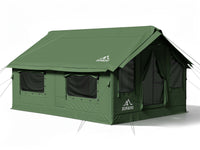
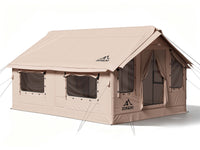
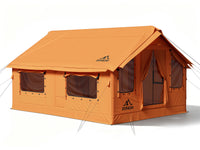
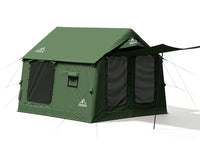
For campers over 6 feet tall, finding a comfortable tent takes more than checking how many people it can sleep. Sleeping length, standing height, and usable interior space all matter.
A tent rated for six people, for example, may still feel cramped for someone who's 6'4" if the sleeping area is too short or the walls slope inward. Even a tent with a 7-foot peak height won't necessarily offer enough room to stand upright throughout the interior.
So how long and tall should a tent be for taller campers? This guide looks at space requirements for different heights, how tent designs affect usable room, and how actual tent dimensions can help you find the right fit.
Why Do Tall Campers Need to Pay Closer Attention to Tent Size?
A tent's listed capacity tells you roughly how many people it can sleep, but not how much room each person will have. For taller campers, body length, sleeping gear, and interior layout can make a noticeable difference in comfort.
A longer sleeping pad, for instance, takes up more floor space, leaving less room for bags and other activities. When sharing a tent, you'll also need to think about spacing between sleeping areas and whether everyone can get in and out comfortably.
The key is to look beyond capacity and make sure both the sleeping area and overall layout meet your needs.
How Long and Tall Should a Tent Be for Tall Campers?
When shopping for tall camping tents, start with your height and allow extra room for sleeping and standing. From there, consider how you prefer to use your tent.
How much extra sleeping length do you need?
As a general guideline, aim for 12–18 inches of usable sleeping length beyond your height. This leaves room for a pillow, sleeping bag, and changing positions during the night.
For someone who's 6'2" (74 inches), that means looking for roughly 86–92 inches of usable sleeping length. It's a starting point rather than a fixed rule, since the ideal amount of space depends on your sleeping position and personal preferences.
Keep in mind that a tent's listed floor length isn't always the same as its usable sleeping length. A thick air mattress or camping cot raises your sleeping position, which can bring your head and feet closer to sloping walls. Before buying, check that your sleeping setup leaves enough clearance at both ends.
Is peak height the same as usable standing height?
Not necessarily. Peak height measures the tallest point of a tent, not the headroom available throughout the interior.
Check the interior height as well as the area where you can actually stand upright. For a camper who's 6'4" (76 inches), 82 inches is a reasonable starting point if you want a little extra headroom.
If you mainly use your tent for sleeping, standing height may be less of a priority. But if you plan to change clothes, organize gear, or spend extended periods inside, having more room to stand can make the tent more comfortable.
Doorway height matters, too. A tent may have plenty of headroom inside, but a low entrance can still mean bending down every time you enter or exit. Checking the doorway dimensions can help you decide whether the design suits your needs.

What tent dimensions should you look for based on your height?
The table below offers a starting point for comparing tent dimensions at different heights.
|
Camper Height |
Recommended Sleeping Length |
Suggested Standing Clearance |
|
6'0" (72 in) |
84–90 in |
78 in or more |
|
6'2" (74 in) |
86–92 in |
80 in or more |
|
6'4" (76 in) |
88–94 in |
82 in or more |
|
6'6" (78 in) |
90–96 in |
84 in or more |
Note: These measurements are general guidelines, not industry standards. Your actual needs will depend on tent design, mattress height, and personal preferences.
Which Tent Designs Work Best for Tall Campers?
Two tents with similar dimensions can feel quite different inside. Their shape and support structure influence how much of that space you can actually use, so it's worth looking at both.
How does tent shape affect usable interior space?
Cabin tents typically have straighter, more upright walls that create a room-like interior. This makes it easier to arrange sleeping gear and storage along the sides while keeping walkways clear. They're particularly practical for family car camping and multi-day stays.
Dome tents have curved walls, with most of their headroom concentrated near the center. Some models are lighter and pack down smaller, making them appealing to campers who mainly need a place to sleep or plan to carry their gear while backpacking.
For taller campers who prioritize portability, a properly sized dome tent may work well. If having more room to move around inside matters most, a cabin-style tent with straighter walls is generally more practical.
Does the support structure affect the interior layout?
The placement and design of a tent's supports can affect where you put your sleeping gear and other equipment.
Traditional tents use fiberglass or aluminum poles. Some designs have support poles that take up interior space, while tents with external pole structures leave the inside less obstructed.
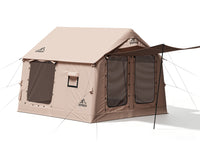
Inflatable tents replace rigid poles with Air Beam supports. Some models have no central support pole, giving you more flexibility when arranging mattresses, storage bins, and areas for everyday activities.
ZONKOO Inflatable Tents for Tall Campers
All ZONKOO inflatable tents have listed interior heights above 6'6", offering ample standing room for taller campers. Their floor dimensions and layouts vary, with options for couples, families, and larger camping groups.
|
Model |
Interior Height |
Floor Dimensions |
Capacity |
|
6'10" |
118.1" × 78.7" |
1–4 people |
|
|
6'11" |
106.3" × 118.1" |
2–4 people |
|
|
7'1" |
118.1" × 157.4" |
2–6 people |
|
|
7'3" |
141.7" × 185.0" |
2–10 people |
|
|
7'3" (main tent) |
141.7" × 246.1" (including extension) |
2–10 people |
For solo or two-person camping, the Lyra and Orion are worth comparing. The Lyra has a smaller footprint, making it a practical option when campsite space is limited, though you'll want to consider how your sleeping pad fits inside. The Orion has more floor space, giving you greater flexibility when positioning sleeping pads and storing gear.
For family trips, consider the Vega or Draco. The Vega provides room for both sleeping and daily activities, while the Draco has removable divider curtains that let larger groups create separate sleeping areas.
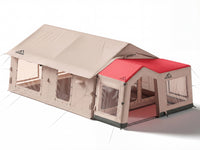
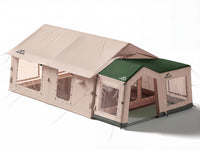
The Draco Plus adds a gazebo extension to the main tent, making it a good option for campers who prefer to keep sleeping and daytime activities in separate areas.
With larger tents, be sure to check your campsite dimensions before your trip. You'll need space not only for the tent itself, but also for guy lines, stakes, and clear access to the entrances.
Find a Camping Tent That Fits Your Height
Being tall doesn't mean you automatically need a bigger tent. What matters is having enough room to sleep comfortably and stand when needed, along with a layout that suits your group size and camping plans.