When people first see an inflatable tent with a stove jack, they may assume that the heat-resistant opening is all they need to place a wood-burning stove inside during cold weather. In actual use, however, the stove jack is only one part of the setup. Where the stove is placed, how the chimney exits the tent, whether the sleeping area can still be arranged properly, and whether the campsite allows stove use will all affect the experience.
A suitable inflatable tent with stove jack is not simply a tent with one more feature. It needs to balance interior space, ventilation, and stove placement. Understanding its purpose, the space a stove requires, and the conditions for using one can help you decide whether this type of tent fits your camping style.
What Is an Inflatable Tent with a Stove Jack?
This type of tent uses inflatable beams to support the structure and includes a stove jack in the tent fabric. A stove jack is a heat-resistant opening designed for a chimney pipe.
When a tent stove is in use, the chimney passes through the stove jack and carries smoke outside. The heat-resistant material around the opening prevents the hot pipe from coming into direct contact with the regular tent fabric. When the stove is not being used, the stove jack can usually be closed, allowing the tent to be used for spring and summer trips or regular family camping.
However, a stove jack is not a smoke exhaust system or a complete safety feature by itself. It is simply the point where the chimney passes through the tent fabric. Safe use also requires a stove designed for tent use, a properly sized chimney, an insulated chimney sleeve, a fire-resistant stove mat, and the necessary securing components. If these parts cannot work together correctly, the tent should not be used with an active stove even if it includes a stove jack.
What Is the Difference Between a Stove Jack and a Regular Vent?
A stove jack and a ventilation opening may both look like openings in the tent fabric, but they solve different problems.
Regular vents are designed for airflow. Low vents allow fresh air to enter, while upper vents help warm, humid air escape, reducing stuffiness and condensation inside the tent. A stove jack is designed to let a hot chimney pass safely through the tent fabric, so the surrounding material must withstand higher temperatures than regular windows and vents.
This is also why a chimney should not be passed through a window, skylight, or AC power port. Even if the opening is the right size, the surrounding material may not be heat-resistant. Extended contact with a hot chimney can cause discoloration, softening, or damage.
It is also not recommended to cut into a tent that was not originally designed with a stove jack. Heat-resistant material can be difficult to install correctly, and the new opening may be too close to an inflatable beam, doorway, or load-bearing section. The modification may also affect the tent’s waterproofing and structure.
What Seasons Is an Inflatable Tent with a Stove Jack Suitable For?
Stove jacks are often associated with winter camping, but a tent with this feature is not limited to snowy conditions.
During summer camping, the stove jack normally remains closed. Shade, cross-ventilation through doors and windows, and upper vents are still the main ways to keep the tent cooler. During this time of year, the stove jack simply remains closed and does not affect the tent’s use as a regular inflatable tent.
As fall arrives and the difference between daytime and nighttime temperatures increases, the stove jack becomes more useful. During multi-day stays, a tent stove can improve comfort in the evening and provide a more comfortable place to change clothes, rest, and organize damp gear.
In cold weather, a stove can improve the interior environment while someone is present to supervise it, but it cannot replace a properly rated sleeping bag, an insulated sleeping pad, and layered clothing. The temperature inside the tent will still drop when the fire weakens or goes out. A stove jack also does not automatically make a tent suitable for blizzards, strong winds, or heavy snow. The tent structure, weather conditions, and campsite environment still need to be considered.
How Much Interior Space Does a Tent Stove Use?
Many people choose a tent based only on its stated capacity. Once the stove is placed inside, however, the space that originally looked generous can quickly feel crowded.
The stove body is only the most obvious part. Space is also needed in front of the stove door for adding wood and removing ash. A fire-resistant stove mat must be placed underneath, and sleeping bags, clothing, furniture, tent fabric, and inflatable beams must remain clear of the stove. The chimney route between the stove and the stove jack will also limit where beds and luggage can be placed.
For this reason, the stated sleeping capacity should not be treated as the usable capacity when a stove is added. Two people may normally fit inside a compact two-person tent, but a three- or four-person space is often easier to arrange once a stove is included. Family campers also need to account for mattresses, luggage, food storage, and interior activity space rather than only checking whether all the beds will fit.
A useful approach is to divide the interior into a sleeping area, a stove area, and an entry path. The stove area needs enough room for the fire-resistant stove mat and stove operation. The sleeping area should not be directly beside the stove, and the path to the door should remain clear. If people need to step around the chimney to leave the tent, the stove door cannot open fully, or sleeping bags must be placed close to the stove, the interior is too crowded.

What Should You Know When Using a Tent Stove?
Before using the stove, confirm that the manufacturer specifically allows it to be used in a tent or similar environment. Review the installation instructions for the stove, chimney, and tent together. A tent with a stove jack does not mean that every wood stove, heater, or fuel-burning appliance can be placed inside.
The stove should stand on a flat, stable surface where it is unlikely to be bumped. It should also remain away from the doorway and main walking areas. The distance between the stove, stove door, chimney, tent fabric, inflatable beams, bedding, clothing, and other flammable materials should follow the stove manufacturer’s instructions. The fire-resistant stove mat should extend beyond the base of the stove and cover the area in front of the door, where sparks, embers, or ash may fall while wood is being added.
The chimney should pass through the center of the stove jack and remain stable. It should not place constant pressure on the edge of the opening or rest against regular tent fabric or an inflatable beam. The outside section should be secured according to the stove instructions. If the system requires an insulated chimney sleeve, spark arrestor, or chimney support, these parts should not be omitted. If the wind becomes stronger, the chimney loosens, or smoke begins flowing back into the tent, stop using the stove and check the setup.
The tent must maintain continuous airflow while the stove is burning. Do not close every door, window, and vent in an attempt to retain heat. A battery-powered carbon monoxide alarm can provide an additional warning, but it cannot replace correct installation, ventilation, and supervision. Charcoal should also not be used inside the tent for heating or cooking because it produces carbon monoxide as it burns.
If anyone experiences a headache, dizziness, weakness, nausea, unusual drowsiness, or confusion, leave the tent immediately, move to fresh air, and stop using the stove. Extinguish the fire properly before sleeping, leaving the tent, or leaving the stove unattended.
After use, allow both the stove and chimney to cool completely before taking them apart. Before packing the tent, inspect the stove jack, tent fabric, floor, and nearby inflatable beams for discoloration, softening, burn marks, or wear. If damage is found, do not continue using the stove in the same location.
How Do You Choose a ZONKOO Inflatable Tent with a Stove Jack?
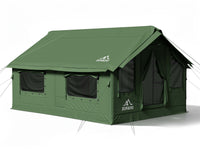
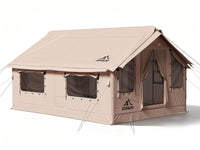
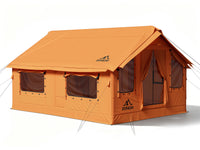
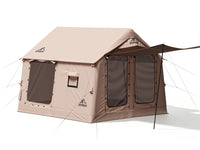
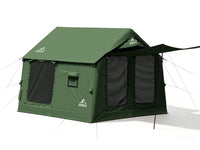
ZONKOO Orion, Vega, Draco, and Draco Plus tents all include adjustable stove jacks, but they are designed for different space requirements. The main consideration is how much room remains for sleeping, storage, and daily activities after the stove and other equipment are placed inside.
For two people traveling with a limited amount of gear, Orion is easier to set up and manage. It works well for a simple short-term campsite, but large mattresses, tables, chairs, and storage boxes need to be limited once a stove is added so they do not block the walkway.
For family camping or multi-day trips with two to four people, Vega offers a layout that is easier to organize. Beds, the stove, and luggage can be placed in separate areas, and campers do not need to pass close to the stove every time they enter or leave. This makes it easier to balance heating, resting, and gear organization.
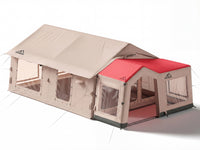
For larger groups or longer stays at the same campsite, Draco’s two-room layout makes it easier to separate sleeping areas from shared activity space. The stove can be placed in an area where people are present to supervise it, but the room divider will also affect how heat moves through the tent. It should not be assumed that every section will remain at the same temperature.
Draco Plus provides more overall space and an extended activity area. If the tent also needs room for meals, gear organization, or rainy-day activities in addition to sleeping and stove placement, this layout offers more flexibility. However, a larger tent also requires more campsite space and greater consideration for transport and setup.
There is no need to automatically choose the largest model. The better choice is the tent that still provides a clear walkway and the required distance around the stove after the stove, beds, and luggage are all inside.
Further Reading: Not sure how much tent space you need after adding a stove, beds, and camping gear? Read What Size Inflatable Tent Do I Need? ZONKOO Inflatable Tent Size Guide to choose a size based on your group, equipment, and length of stay.
Is an Inflatable Tent with a Stove Jack Worth It?
If you regularly plan fall trips, cold-weather camping, or multi-day stays and intend to use a suitable tent stove at campsites where it is allowed, a stove jack can make an inflatable tent useful across more seasons. For families and groups that spend more time inside the tent, it can provide more comfortable conditions for heating, resting, and daily activities.
If most trips take place in warm weather, last only one or two nights, or involve campsites where stove use is prohibited, a stove jack does not need to take priority over interior space, ventilation, waterproofing, and portability.