For a first tent camping trip with a toddler, it is easier to start with accessible car camping and keep the trip simple. For families camping with toddlers, choosing the right campsite and tent, planning the sleep setup, meals, bathroom needs, and possible weather changes matter more than packing the schedule with activities.
Many of the real challenges do not show up until you arrive. The tent may feel much tighter once the beds and kids’ gear are inside. A middle-of-the-night bathroom trip becomes harder when shoes and lighting are buried in a bag. Plans for the next day may have to change because your child did not sleep well.
For the first trip, keep the plan simple and flexible. Thinking through a few key details ahead of time gives your child a chance to get used to the tent and campsite while making the first overnight stay easier for everyone.
Keep the First Trip Simple
For your first time camping with toddlers, avoid combining a remote campsite, long hikes, and complicated camp cooking in the same trip. Car camping is easier to manage because your vehicle stays nearby, giving you quick access to extra clothes, food, and kids’ gear. It also makes it easier to leave if the weather changes or your child is not doing well.
For a first trip, consider:
- Choosing a campground close to home where you can park near your campsite.
- Starting with one night or a short weekend instead of several nights.
- Planning only one or two simple daytime activities rather than fitting hiking, sightseeing, and cooking into the same day.
- Trying a backyard overnight first if your child has never slept in a tent, so you can test the sleep setup and available tent space.
The first trip is really a chance to see how your child handles sleeping in a tent and whether your current gear and setup work well for your family. Once you know that, you can gradually add more distance and activities on future trips.
Choose a Campsite and Tent Based on How Your Family Will Actually Use Them
Choose a Campsite That Makes Caring for Your Toddler Easier
Before booking, check the campground map and campsite details, paying close attention to:
- Restrooms and drinking water. A walk that feels short during the day can feel much longer during a middle-of-the-night bathroom trip. For a first trip, try to avoid a site that is far from the restrooms.
- Parking near the campsite. Clothes, food, diapers, and other supplies may be needed several times throughout the day. When the vehicle is nearby, less-used gear can stay in the car instead of being unloaded all at once.
- A level, well-drained tent area. Avoid obvious low spots where water may collect around the tent after rain.
- Nearby areas that require close supervision. Check for roads, parking areas, steep slopes, lakes, and rivers before you start setting up. A toddler who is already walking may begin exploring while the adults are still unloading gear.
- Easy access if you need to leave early. If your child feels unwell, the weather changes, or the first night simply does not go well, being able to leave without difficulty can make things much easier.
A campground does not need every possible amenity, but the restroom location, parking, campsite layout, and access should not make everyday care harder than it needs to be.
Do Not Choose a Tent Based on Sleeping Capacity Alone
Two adults and one toddler do not automatically fit comfortably in a three-person tent. For family camping, usable floor space, interior height, ventilation, and ease of setup matter more than the sleeping capacity printed on the tent.
- Usable floor space: Lay out the adult bedding, toddler sleeping pad, or child's bed at home using the actual dimensions, then compare that footprint with the tent floor. Once everything is inside, the entrance should stay clear, there should still be room to move around at night, and frequently used clothing and kids’ gear should have a place. If you have to step over beds just to get in and out, the tent will feel cramped in real use.
- Interior height: Adults may need to make beds, change a child’s clothes, or reach for gear inside the tent. Being able to stand and move comfortably makes those everyday tasks much easier.
- Ventilation: During daytime rest or naps, the temperature inside the tent can change quickly with the weather. Check the placement of doors, windows, skylights, and other vents to see whether airflow can be adjusted as conditions change.
- Ease of setup: After arriving, you still need to unload gear, watch your child, and organize the sleeping area. A straightforward setup makes it easier to get the family’s main resting space ready first.
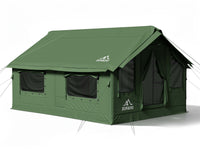
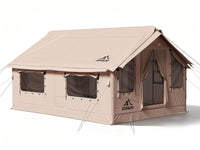
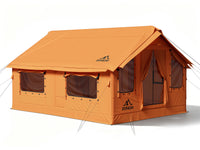
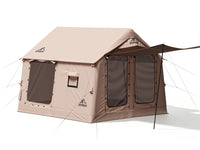
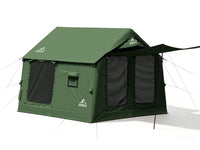
The ZONKOO Vega is an inflatable camping tent with 129 sq ft of interior space and 7'1" of height, making it easier to separate adult bedding, a child’s sleeping area, and frequently used gear. It has seven windows and skylights for adjustable ventilation, while the inflatable support structure reduces the need to connect traditional tent poles one by one, helping you get the tent up faster and move on to organizing sleep gear and kids’ essentials.
For families with toddlers, the right tent is not simply one that is “big enough.” It should make everyday campsite routines easier and more comfortable for the whole family.
Vega
Plan Your Toddler’s Sleep Before the Trip
The first night in a tent means adjusting to a new sleeping environment, unfamiliar sounds, and different light. Instead of figuring everything out at the campsite, test the sleep setup ahead of time.
Try the sleep gear at home first.
If you plan to use a portable toddler bed, sleeping pad, or other sleep gear, let your child try it at home before the trip. This also gives you a chance to check the size and make sure you know how to use it. That way, the tent and the bed are not both new on the first night.
Take extra care with babies under one year old.
If a child on the trip is under one, continue following safe sleep guidelines. Use a crib that meets applicable safety standards and keep the sleep surface firm and flat. Do not substitute a regular air mattress or soft bedding.
Keep bedtime routines familiar.
Bring familiar pajamas, favorite books, comfort items, and the bedtime routine your child already knows. Sleep and wake times may shift on the first night, so there is no need to force the exact same schedule as at home.
Keep nighttime essentials within easy reach.
Shoes, jackets, lighting, toileting supplies, and spare clothes should stay together in one easy-to-reach place. If your child wakes up, needs to go outside, or needs a change of clothes, you will not have to search through your gear.
If your child still naps during the day, check the temperature and ventilation inside the tent before naptime. A tent can heat up quickly in direct sun, so do not use a hot or poorly ventilated tent as a nap space.

Organize Your Toddler’s Essentials by Use
When camping with a toddler, the problem is not always forgetting something. Sometimes the bigger issue is needing a change of clothes, wipes, or medicine and realizing everything is packed in different boxes. Organizing items by how you will use them makes everyday essentials much easier to find at the campsite.
|
Category |
What to Pack |
How to Organize It |
|
Meals and snacks |
Bring familiar meals and snacks that are simple to prepare. |
Keep snacks and food for the day separate so you do not have to dig through the entire food box each time. |
|
Clothing |
Pack extra shirts, pants, socks, and pajamas, especially items likely to get muddy, wet, or stained with food. |
Keep clean clothes together and bring a separate bag for wet or dirty clothing. |
|
Toileting supplies |
Pack diapers, potty-training supplies, wipes, and trash bags based on your child’s current needs. |
Keep daytime supplies separate from anything you may need at night. |
|
Medicine and first-aid supplies |
Pack bandages, antiseptic supplies, a thermometer, and any medicine your child normally uses. Bring enough prescription medication for the full trip. |
Store these items separately where adults can find them easily, but toddlers cannot reach them. Keep them away from regular toiletries. |
The goal is not to pack as much as possible. It is to make sure the things you actually need are easy to find and easy to return to the same place.
Set Up the Campsite Before Your Toddler Starts Exploring
Once you arrive, avoid having both adults unload gear and set up the tent at the same time. Toddlers may start exploring almost immediately, so if two adults are present, divide the work: one stays with the child while the other handles the main setup.
Check the campsite surroundings → Choose the tent location → Set up and secure the tent → Place sleep gear and daily essentials → Keep the entrance and main walkway clear → Set up tables, chairs, and other gear last
Once the tent is up, define where your child can safely move around and pay particular attention to these areas:
- Fire and cooking areas: Keep toddlers away while cooking, using a fire, or while equipment is still hot, and maintain adult supervision.
- Lakes, rivers, and other open water: Toddlers near the water need continuous, close adult supervision. A life jacket does not replace supervision.
- Roads and parking areas: Cars and RVs still move through campgrounds, so roads and parking areas should not be treated as play spaces.
- Tent stakes and guylines: When possible without affecting tent stability, keep guylines out of main walking paths and pay extra attention to them after dark.
- Tent entrance: Keep the entrance clear of boxes and other gear, and do not allow a toddler to leave the tent without an adult.
Rather than spending the whole day telling your child where not to go, establish a clear area where they can move around freely. Areas near fire, water, and roads should always require an adult.
Check More Than Rain—Watch Temperature and Wind, Too
Before leaving, check the daytime high, overnight low, expected duration of rain, and wind gusts in addition to whether rain is in the forecast. These details give you a better sense of whether your child can stay comfortable during the day and at night, and whether the tent remains safe to use.
During steady rain, keep sleep gear and spare clothes dry first. Store these items in waterproof bags or containers, and avoid pitching the tent in low areas where water may collect. If water starts pooling around the tent or the sleeping area becomes difficult to keep dry, consider moving to another site or adjusting the trip.
Further reading: Camping in the Rain: How to Keep Your Tent and Gear Dry
In hot weather, check the actual temperature inside the tent. A tent can become much warmer in direct sun. Use natural shade or a separate shade structure when possible, and ventilate the tent according to its design. Before your child naps inside, make sure the temperature is comfortable.
When temperatures drop at night, prepare sleep gear for the expected low. Do not base nighttime insulation on how the weather feels during the day. If the forecast low falls outside the suitable range of your current clothing or sleep setup, bring appropriate gear, change the dates, or choose another campsite rather than trying to solve the problem after dark.
In strong wind, focus on whether the tent can remain stable. Use stakes, guylines, and anchor points according to the product instructions, and recheck them as the wind picks up. If the tent can no longer remain stable, stop using it and move to a safer location based on site conditions and campground guidance.
Quick Camping With Toddlers Checklist
Before leaving, check once more:
Campsite
- You have reviewed the campground map and confirmed restroom access, parking, and campsite access.
- You know whether roads, water, or other areas that need extra attention are close to the site.
Sleep
- Your child has already tried the sleep gear.
- Once the beds are in place, the tent entrance and nighttime walkway remain clear.
Daily Essentials
- Spare clothes, food, water, and toileting supplies are packed.
- Medicine, first-aid supplies, sun protection, and insect protection are included.
Weather and Gear
- You have checked the high, low, expected rain duration, and wind gusts.
- The tent, stakes, guylines, pump, and lighting have been checked.
Your First Trip Does Not Have to Be Perfect
Camping with a toddler takes some adjustment. Once you arrive, your daily routine may not look the same as it does at home, and plans may need to change. As long as you leave room to adjust, there is no reason to push through the original schedule just for the sake of sticking to it.
After one real overnight trip, the next one becomes easier to plan. You will have a better sense of what was worth bringing, what could be simplified, and what your tent may still be missing in day-to-day use.