When choosing camping furniture, start with how you camp, your group size, how the furniture will be used, and how much room you have at the campsite and in your vehicle. For car camping and family camping, the right camping furniture usually comes down to balancing comfort, practicality, and packed size.
Furniture that looks like a good fit on its own can feel very different once it becomes part of a full camping setup. A chair may be comfortable, but several chairs together can take up a large share of your cargo space. A table may look roomy, only to crowd the campsite once it is unfolded. You may also bring several pieces and find that you use the same few every day.
Rather than shopping from a standard “camping furniture essentials” list, think first about how everyone will sit, how you plan to eat, and what the table will actually be used for. Then decide which chairs, tables, and furniture combinations you really need.
Start With How You Camp
The same camping furniture can make sense for one type of trip and feel impractical for another. Before comparing chair heights, table sizes, or other features, consider how the furniture will get to the campsite, how long you will use it, and how much room you can give it.
Car Camping: Prioritize Comfort, but Keep Packed Size in Mind
If you can park at or close to your campsite, your furniture does not need to be as lightweight as backpacking gear. You can put more emphasis on back support, seat comfort, and longer periods of sitting, while choosing a table with enough surface area for meals or group activities.
Still, everything has to fit in the vehicle with your tent, cooler, cooking gear, food, and luggage. A single chair may not look large, but several chairs and a table can quickly take up a significant amount of space.
For car camping, the goal is not simply to choose the lightest furniture or the biggest, most comfortable pieces. It is to find the right balance between comfort at the campsite and packed size in the vehicle.
Walk-In Camping: Carrying Distance Makes Portability More Important
If the parking area is some distance from your campsite, portability becomes more important even if the trip is not true backpacking.
In this situation, pay more attention to packed size, weight, and how easy each piece is to carry rather than simply choosing larger, more comfortable furniture. One chair may not feel particularly heavy on its own, but once you also need to carry a tent, cooler, and other gear, an extra table or several bulky chairs can mean more trips back and forth.
Furniture that works well at a campsite next to the vehicle may be much less practical at a walk-in site. The farther you have to carry everything, the more useful simple, compact furniture becomes.
Family and Group Camping: Group Size Does Not Determine How Much Furniture You Need
For family or group camping, the number of people tells you how many campers are coming, but it does not automatically tell you how large a table you need or how many chairs to bring.
A group of four that spends most of the day hiking, biking, or exploring may only need a simple setup for quick meals and a place to sit in the evening. If the same group stays at one campsite for several days and regularly eats, talks, or plays games together, a more complete dining and seating area becomes more useful.
For group camping, the better question is not “How many pieces of furniture do we need for this many people?” but how the group will use the campsite and how often the furniture will be used throughout the day.
Once you know how you will camp and how the campsite will be used, you can decide which pieces of furniture are actually worth bringing.

Decide Which Camping Furniture You Actually Need
It is easy to bring more camping furniture than you really need. Chairs, dining tables, side tables, and food-prep tables can all serve a purpose, but what you actually need depends on how you plan to spend your time at camp. If you mainly want a place to sit and relax in the evening, two chairs and a small table may be enough. If you plan to cook, eat, talk, or play games at the campsite, a larger camping table that several people can use will be more practical.
The facilities already available at your campsite can also change what you need. If a picnic table is provided and works well for everyday meals, you may not need another large dining table. If there is no usable table and you regularly need a surface for food prep and dishes, bringing your own camping table makes more sense. Likewise, if you only need a place for coffee, a lantern, your phone, and snacks, a small side table may be enough without taking up extra room at camp or in the vehicle.
A simple question can help you decide whether a piece is worth bringing: Will you use it often on this trip? Start with the tables and chairs you know you will use regularly, then think about specific sizes and styles. That is usually more practical than packing a full setup based on a standard “camping essentials” list.
If you are also planning your sleep setup with a camping cot, air mattress, sleeping pad, or other sleep gear, read: How to Sleep Comfortably in a Tent? A Guide to Camping Sleep Systems
How to Choose the Right Camping Chair
When choosing a camping chair, do not start with weight or extra features. First, think about how it will be used, who will sit in it, and how easy it is to bring to the campsite.
Start with how you will use it. If you mainly want to sit outside the tent, enjoy the view, talk, or lean back and relax, a lower moon chair with a deeper, wraparound seat may suit that style of use better. If you often sit at a table for meals or games, or need to get up frequently, a more upright folding chair is usually easier to use. Neither style is inherently better; the right choice depends on what you will do most often.
Folding Chair
Then consider how the chair fits the person using it. Seat height affects how easy it is to sit down and stand up, especially for taller campers or anyone who finds low seating uncomfortable. For longer periods of sitting, consider whether the seat is wide enough, whether the backrest provides comfortable support, and whether the armrests restrict movement. Make sure the chair’s rated weight capacity accommodates the person using it. If several people will share the chair, choose based on the heaviest user. On grass, gravel, or softer ground, also pay attention to whether the chair legs are likely to sink or feel unstable.
Finally, consider how easy it is to transport. Do not look at weight alone; folded length and overall packed size matter too. Some lightweight chairs are still fairly long when folded, and several of them can take up considerable room in a vehicle. If you need to carry the chair from the parking area to the campsite, make sure it is easy to handle when packed. If you often camp in hot, humid, or wet conditions, also consider how breathable the seat is and how easily it can be cleaned and dried.
Moon Chair
How to Choose the Right Camping Table
When choosing a camping table, start by deciding whether you will mainly use it for meals, food prep, or simply holding everyday items. Each use puts a different priority on surface area, height, and stability, so labels such as “2-person” or “4-person” only tell part of the story.
- Mainly for meals: Consider how many people will use the table at the same time and what usually needs to fit on it. Four people having a simple breakfast need far less space than four people setting out plates, food, drinks, and cookware. Besides tabletop size, make sure everyone can sit comfortably and has enough room to get in and out of their chairs.
- Mainly for food prep: Pay attention to height and stability as well as surface area. A table that is too low can leave you bending over while preparing food, while an unstable table may wobble on a slight slope, gravel, or soft soil. If you plan to use a camp stove or another heat-producing appliance on the table, check the use requirements for both the appliance and the table first. Do not assume every camping table is designed for use with a heat source.
- Mainly for drinks and personal items: A small table is usually enough. If you only need space for a lantern, coffee, your phone, or snacks, there is little reason to bring a larger table that takes up more room in the vehicle and at the campsite.
Once you know how the table will be used, check whether it is stable when set up, easy to fit in the vehicle when folded, and simple to set up and pack away.
If you regularly place water containers, cookware, or other heavy items on the table, check its rated weight capacity as well. For cooking and dining, an easy-to-clean tabletop is often more useful than extra features. Cup holders, storage nets, and similar details can add convenience, but they should come after these basic considerations.
Folding Table
Should You Buy Camping Tables and Chairs Separately or Choose a Camping Furniture Set?
If you need both a table and chairs, you do not have to buy them as a set. Buying separately gives you more flexibility, while a camping table and chair set works better when your group size and the way you use the furniture tend to stay consistent.
|
Buying Separately May Be Better If |
A Table and Chair Set May Be Better If |
|
You already own some camping furniture and only need to fill in the gaps |
You are putting together a complete camping furniture setup for the first time |
|
Your group size changes from trip to trip |
You usually camp with about the same number of people |
|
Chairs are used in different areas around the camp |
The table and chairs are usually used together for meals, conversation, or games |
|
Different campers prefer different chair heights or seating styles |
You want the table size and number of chairs matched from the start |
|
Some trips only require chairs or a small table |
Most trips involve using both the table and chairs |
For example, two people on a weekend camping trip who mainly want a place to relax and have coffee may prefer choosing two chairs and a small table separately. If a family regularly eats meals and plays games together at the campsite, a camping table and chair set sized for a consistent group can make the setup easier to plan.
The better option depends mainly on whether the table and chairs are usually used together and whether your group size stays consistent—not on how many pieces happen to come in the set.
Table & Chair Set
Make Sure Your Furniture Fits Both the Campsite and the Vehicle
A chair and table may each work well on their own, but the full setup may not. Before the trip, check two things: whether the furniture will crowd the campsite when set up, and whether it will fit in the vehicle with the rest of your gear when packed.
Make Sure It Fits at the Campsite
Set up the tent first, then decide where the tables and chairs will go. Keep the entrance and main walkways clear, and leave enough room around each chair for people to sit down, stand up, and move comfortably. Do not plan the layout based only on the furniture’s dimensions.
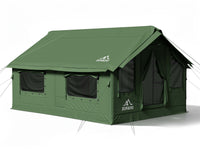
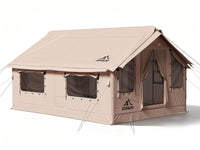
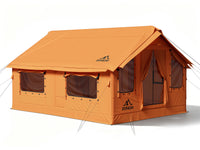
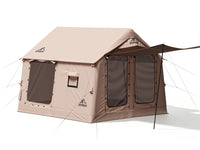
If tables and chairs will be used inside a large tent or covered living area, account for beds and luggage as well. A tent’s stated sleeping capacity only gives a rough idea of how many sleeping spaces it can accommodate; it does not tell you how much usable room will remain once furniture is added. For family or group camping, separating sleeping, dining, and seating areas can help keep everything from crowding the same part of the campsite.
Make Sure the Full Setup Fits in the Vehicle
Earlier, the focus was on the packed size of each individual piece. At this point, look at everything you need to pack together:
Tent + chairs + table + cooler + cooking gear + food + luggage
Even when tables and chairs fold down, several pieces together can still take up a significant amount of cargo space. Before taking a new furniture setup on its first trip, try packing the vehicle at home the way you plan to for the actual trip. This makes it easier to see whether larger items fit and whether frequently used gear is still easy to reach.
If space is tight, keep the tables and chairs you expect to use regularly and leave rarely used pieces at home. Camping furniture only makes sense for a trip if there is enough room to use it at camp without making the vehicle noticeably harder to pack.
Choose Camping Furniture You Will Actually Use
The right camping furniture is not necessarily the largest or the most feature-packed, and it does not mean bringing every table or chair you might possibly use. What matters is how well the furniture matches the activities planned for the trip, your group size, and the space available at the campsite and in the vehicle.
If a chair is comfortable and easy to bring along, a table gives you enough space for meals or food prep, and the full setup fits without crowding the campsite or vehicle, the furniture is already doing what it needs to do. Starting with the tables and chairs you know you will use regularly is more practical than adding gear simply to make the setup feel “complete.”