As temperatures drop, a heater can make a tent more comfortable, but not every heater is suitable for tent use. Tents are smaller than typical indoor spaces, with tent fabric, sleeping bags, and mattresses often close to the heat source. Closing doors and windows also changes airflow, so heaters require extra caution inside a tent.
Only use a heater if its instructions explicitly allow use in the intended tent environment and if the tent space, power supply, ventilation or exhaust, and campground rules meet its requirements. Camping stoves, grills, and charcoal are not tent heaters, and portable heaters should not be left running while you sleep or when unattended.
Start by Identifying the Type of Tent Heater
A “tent heater” is not one specific device. Common options include electric heaters, propane and other fuel-burning heaters, and wood-burning tent stoves. Each produces heat differently and has different requirements for power, ventilation, and tent structure.
Electric Heaters
Electric heaters use electricity to produce heat. Common types include fan-forced and radiant heaters. Because they do not burn fuel, they do not produce carbon monoxide from combustion or require fuel canisters or a chimney.
That does not make them suitable for every tent. Tent fabric, sleeping bags, mattresses, and clothing may be close to the heater, while dew and moisture are common at campsites. Before use, check where the heater is approved to operate, how it should be powered, the required clearance from combustible materials, and the risks of tipping or moisture.
The main risks are fire from nearby combustibles, electrical overload, tipping, and use in damp conditions.
Propane and Other Fuel-Burning Heaters
These heaters burn propane, kerosene, or other fuels. Because they do not rely on campground electrical hookups, they can also work at sites without power.
Their main risks come from combustion. Any fuel-burning heater requires attention to carbon monoxide and airflow. Some models may be approved for specific spaces, but “indoor-safe” does not automatically mean “tent-safe.” Only use one if its instructions explicitly allow use in the intended tent environment and all required ventilation and safety conditions can be met.
Labels such as “Camping Heater” or “Portable Heater” alone do not mean a heater can be used inside a tent.
Wood-Burning Tent Stoves
Wood-burning tent stoves burn wood or other solid fuel and use a chimney to vent smoke outside. Unlike the first two types, a wood stove cannot be considered in isolation. The stove, chimney, and tent need to work together as a system.
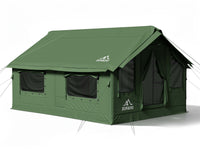
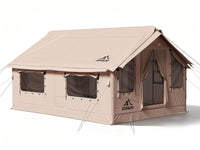
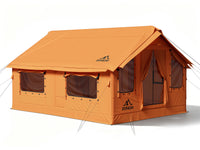
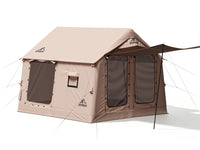
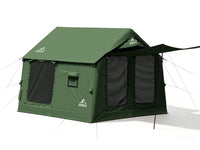
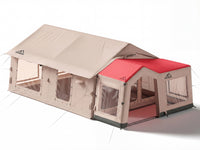
Tents designed for wood stove use typically have a Stove Jack, a heat-resistant opening that allows the hot stovepipe to pass through the tent fabric. ZONKOO Orion, Vega, Draco, and Draco Plus tents all include a Stove Jack for the stovepipe of a compatible wood stove.
Draco
A Stove Jack is only one requirement and does not mean that any stove can be installed. Stove placement, chimney size, interior space, and installation requirements must all be compatible.
Wood stoves are therefore best planned into the campsite setup from the start, rather than added to a standard tent after temperatures drop at night.
If you plan to use a wood stove, read What to Know About Inflatable Tents with Stove Jack Before You Buy for more on stove setup, chimney configuration, and practical considerations for tents with a Stove Jack.
Confirm That the Heater Is Suitable for the Tent and Campsite
Once you know which type of heater you plan to use, check whether it suits the tent and campsite.
First, check where the heater is approved for use. A product name does not replace the manufacturer’s instructions. For fuel-burning heaters in particular, check which spaces they may be used in and the required ventilation.
Next, make sure the tent has enough space. After setting up mattresses, sleeping bags, and other gear, there still needs to be enough room to maintain the required clearance around the heat source. If the heater can only sit next to the sleeping area, the entrance, or a large amount of gear, the tent is not suitable for that setup.
Check campsite conditions in advance. Electric heaters require an appropriate power source, fuel-burning heaters need adequate airflow, and wood stoves require proper stove and chimney installation. Some ZONKOO inflatable tents have dedicated power-cord access ports, making it easier to route power connections at campsites with electrical hookups. However, an access port does not mean every electric heater is suitable for tent use. The heater’s own power and operating requirements still apply.
If the setup requires temporary wiring, equipment modifications, or changes to the tent structure, do not use it.

Safety Rules to Follow While Using a Heater
- Keep enough clearance around the heat source.
Place the heater on a flat, stable surface where it is unlikely to tip, and keep it away from tent fabric, mattresses, sleeping bags, clothing, and other combustible materials. For portable electric heaters, the U.S. Consumer Product Safety Commission (CPSC) recommends at least 3 feet of clearance from bedding, clothing, and other combustible materials, as well as keeping the heater away from water and damp areas.
- Do not reduce required ventilation to trap heat.
Closing every door, window, and vent may reduce heat loss, but it can also interfere with the airflow the heater requires. A carbon monoxide alarm provides an extra warning but does not replace proper ventilation or make an unsuitable heater safe for tent use.
- Use an appropriate power source for electric heaters.
Portable electric heaters should be connected directly to a suitable power source without extension cords, power strips, or makeshift multi-plug adapters. At campsites with electrical hookups, consider circuit capacity and avoid running several high-power appliances on the same circuit.
- Monitor the stove and chimney when using a wood stove.
Maintain proper clearance from tent fabric and watch the hot stovepipe, chimney stability, and exhaust flow. A Stove Jack provides an opening for the stovepipe but does not replace proper stove installation.
- With fuel-burning equipment, also watch for physical symptoms.
If anyone develops a headache, dizziness, weakness, nausea, unusual drowsiness, or confusion, leave the tent immediately, move to fresh air, and seek emergency medical help. Only handle or shut down the equipment if doing so is safe and does not delay evacuation.
With any heater, stop using it and check the cause if the plug or connection becomes unusually hot, combustion changes, exhaust flow is restricted, or another obvious problem appears.
Heater Risks Increase While You Sleep
Portable heaters should not be left running while you sleep or when unattended.
While awake, you can notice if a heater tips over, combustion changes, or the air inside the tent becomes unsafe. Once asleep, that monitoring stops. Carbon monoxide from fuel-burning equipment is also colorless and odorless, so you cannot rely on your senses to detect it.
Using a portable heater briefly before bed is different from leaving it running all night. Turn it off according to its instructions before going to sleep.
Wood-burning tent stoves also require continuous supervision while in use. Before sleeping, leaving the tent, or whenever you can no longer monitor the stove, fully extinguish the fire according to the stove instructions. Do not leave it burning unattended overnight.
At night, your sleep system should provide the foundation for staying warm. Your sleeping bag should match the expected low temperature, your sleeping pad should provide enough ground insulation, and dry insulating clothing should help maintain warmth after the active heat source is turned off.
Make Sure Your Heating Setup Fits Your Camping Environment
The right heating method depends on the actual camping conditions. Campsite power, safe space inside the tent, ventilation or exhaust, and campground rules all affect which option is suitable.
The tent should be part of the same decision. Group size, interior layout, camping season, and whether you plan to use a wood stove all affect space and structural requirements. It is more practical to decide how you plan to camp first and then choose a tent that supports those needs, rather than adjusting the entire setup around a specific heater.