Dispersed camping generally means camping outside developed campgrounds in areas where camping is allowed. Unlike a stay at a developed campground, there is usually no assigned, numbered campsite. Instead, campers find an existing site or another permitted location and take care of their own drinking water, sanitation, trash, and power needs.
For a first dispersed camping trip, preparation goes beyond packing a tent and sleeping bag. You also need to know where camping is allowed, which local rules apply, whether your vehicle can reach the area, and what you will need to manage without campground facilities.
What Is Dispersed Camping?
In the United States, dispersed camping generally refers to camping outside developed campgrounds, commonly on certain BLM-managed lands and in national forests.
These areas often have no drinking water, restrooms, electricity, or trash service, and campers are responsible for choosing a suitable place to set up camp.
However, dispersed camping does not mean you can pitch a tent anywhere on public land, nor is it simply another term for “free camping.” Even on public land, there may be limits on length of stay, vehicle access, seasonal closures, campfires, or permits.
What Is the Difference Between Dispersed Camping and Developed Campgrounds?
|
Category |
Dispersed Camping |
Developed Campground |
|
Campsite |
Campers generally find a suitable site themselves |
Designated campsites are typically provided |
|
Reservations |
Often not required, depending on local rules |
Reservations or on-site registration are common |
|
Drinking water |
Usually needs to be brought in |
Available at some campgrounds |
|
Restrooms |
Usually not available |
Commonly provided |
|
Trash |
Usually needs to be packed out |
Some campgrounds provide trash facilities |
|
Electricity |
Usually not available |
Available at some campgrounds |
|
Ground conditions |
Campers need to decide whether the site is suitable for a tent |
Campsites are usually prepared |
|
Rules |
Must be checked with the appropriate land management agency |
Usually posted or provided by the campground |
Where Can You Go Dispersed Camping?
Many BLM-managed lands and national forests in the United States allow dispersed camping, but whether an area is open, how long you can stay, and where vehicles are allowed depend on the rules for that specific location.
BLM-managed lands
Many BLM-managed areas allow dispersed camping, but open areas and use requirements vary by location. Do not assume that every spot is suitable for an overnight stay simply because it is on BLM land.
National forests
Many national forests also allow camping outside developed campgrounds, but rules for campsite location, length of stay, and campfires can vary by forest and management area.
If you are entering a national forest by vehicle, check the Motor Vehicle Use Map (MVUM) for that area to confirm which roads and routes are open to motor vehicles and whether seasonal or vehicle-specific restrictions apply. A road appearing on a standard navigation app does not necessarily mean it is legal to drive there.
Where is dispersed camping not automatically allowed?
Do not assume dispersed camping is allowed in national parks. Some parks may require permits or restrict backcountry camping to designated areas, so the rules for each park need to be checked separately.
Private property, environmentally sensitive areas, closed public lands, and some parking areas, trailheads, and day-use areas should not be treated as overnight camping spots simply because there is open space nearby.
If you are still unsure where to camp, visit the ZONKOO Tent Camping Near Me page to find tent camping options nearby.
How to Find a Legal Dispersed Campsite for the First Time
If you are looking for a dispersed campsite for the first time, follow these steps.
Step 1: Identify the land manager or owner
Start with official maps or land ownership information to determine whether the area is managed by the BLM, the Forest Service, a state agency, another public entity, or is privately owned.
You need to know who manages or owns the land before you can find the rules that actually apply to camping there.
Step 2: Check local rules
Focus on confirming:
- Whether dispersed camping is allowed
- Maximum length of stay
- Whether a permit is required
- Current fire restrictions
- Which roads are open to vehicles
- Whether specific distance or area restrictions apply
Do not assume campfires are always allowed when dispersed camping. Fire rules can change with the season and fire danger level. If you plan to have a campfire, check whether a permit is required and whether any temporary fire restrictions are in effect.
Step 3: Prepare backup locations
Do not base the entire trip on a single map coordinate.
Your planned campsite may already be occupied, weather may make the road difficult to travel, or the ground may turn out to be unsuitable for a tent. For a first trip, it is more practical to identify one main area and one or two backup locations in advance.
Maps can help narrow down possible areas, but the final decision about whether a site is suitable still needs to be made on-site.

What Gear Do You Need for Dispersed Camping?
For a first dispersed camping trip, you do not need to pack every piece of camping gear simply because the area is remote. The main priority is replacing the basic services that a developed campground might otherwise provide.
Water and food
Do not assume safe drinking water will be available nearby.
Plan for the water you will need for drinking, cooking, and basic cleaning. Even if there is a river, lake, or spring nearby, natural water sources should not be treated as safe drinking water without proper treatment.
Before leaving, check local food storage and wildlife regulations as well. Food, trash, toiletries, and other scented items should be stored according to local requirements. In areas where bear-resistant containers are required, a regular storage bin should not be used as a substitute. Food and trash should not be left unsecured inside the tent.
Toilet and sanitation
If there are no restrooms, check the local requirements for human waste before the trip.
Depending on the area, you may be required to use a portable toilet, pack waste out, or follow another approved disposal method. Do not assume digging a hole is permitted everywhere.
Where no trash service is available, food packaging, food scraps, and other garbage need to be packed out. Dishwater and other wastewater should also be handled according to local rules. Do not pour wastewater containing food scraps, grease, or cleaning products directly into natural water sources or around the campsite.
Navigation and emergency gear
Remote areas may have unreliable cell service and no lighting or electrical outlets. Consider bringing:
- Offline maps
- A headlamp and backup lighting
- A portable power bank
- First aid supplies
- Vehicle emergency tools
- Clothing for changing weather conditions
If the route includes unpaved roads, consider whether your vehicle is suitable for the actual road conditions before heading out.
How to Tell If a Dispersed Campsite Is Suitable for a Tent
Start by looking for a reasonably flat area with enough room to set up your tent. A site that is noticeably sloped, low-lying, or located along a natural drainage path may still look usable, but it can collect water when it rains.
Avoid dry creek beds, washes, and obvious drainage areas as well. These spots may appear flat and open, but sudden water flow can still occur after rain upstream. Check above and around the tent site for dead branches, unstable trees, falling rocks, or other obvious hazards.
Sharp rocks and branches on the ground can damage the tent floor. Make sure your stakes can be secured properly and that there is enough room for the guy lines. On hard or rocky ground, use a staking method suited to the local conditions.
When dispersed camping, use previously disturbed areas whenever possible. Avoid clearing vegetation, creating new tire tracks, or expanding an existing campsite just to make room for a tent. Keep vehicles on roads and in areas where travel is allowed. When you leave, pack out all trash, food scraps, and personal belongings, and do not leave temporary structures behind.
Finally, make sure your vehicle can safely enter and leave the site, especially if the route includes sand, mud, or steep grades.

ZONKOO Inflatable Tents for Different Dispersed Camping Trips
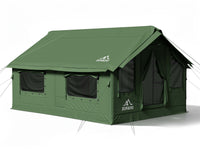
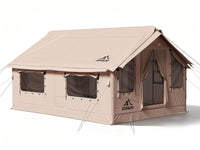
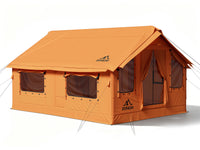
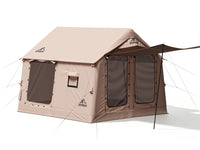
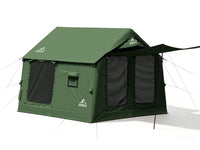
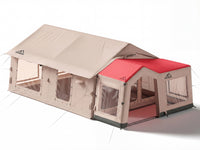
If you are mainly reaching your campsite by vehicle, ZONKOO Lyra, Orion, and Vega fit different types of dispersed camping trips, from short first-time outings to multi-person stays over several nights.
Lyra: Better for small groups, short trips, and smaller campsites
If only a few people are camping, or you are not sure how much flat ground will be available, Lyra is easier to fit into a smaller site. It weighs 29 lb, provides 65 sq ft of interior space, and takes just 3 minutes to set up, making it the most compact of the three tents.
For short stays or a first dispersed camping trip, the smaller footprint makes it easier to find a workable setup area and reduces the amount of campsite space you need.
Lyra
Orion: Better for small groups that need more space
For 2–4 people, Orion works well when you need both sleeping space and extra room inside the tent for gear and everyday use.
Orion provides 86 sq ft of interior space and takes 7 minutes to set up. Compared with the more compact Lyra, it gives multiple campers more room for sleeping and gear without requiring a much larger campsite. For two people carrying more equipment or a small group of three to four, Orion offers a practical balance between interior space and campsite flexibility.
Orion
Vega: Better for larger groups and multi-night stays
Vega is designed for 2–6 people and provides 129 sq ft of interior space. For families, small groups, or trips that involve staying in the same location for several nights, the larger interior gives you more flexibility to arrange sleeping areas, luggage, and everyday activities.
The room divider helps separate sleeping and activity areas, while multiple windows and large skylights bring in natural light and airflow, helping the larger interior feel bright and open.
Vega does require a larger flat setup area and more vehicle cargo space, so it is better suited to trips where you have a good idea of the campsite in advance and plan to stay for several nights.
Vega
Dispersed Camping Checklist Before You Leave
Before heading out, run through this checklist:
- Confirm that dispersed camping is allowed in the destination area
- Check length-of-stay limits and permit requirements
- Check current fire restrictions
- Confirm vehicle access conditions
- Download offline maps
- Pack enough drinking water
- Plan for toilets, food storage, and trash
- Check the weather forecast
- Identify backup campsites
- Share your general route and expected return time with someone
- Check that the tent, air pump, stakes, and guy lines are packed
Prepare for Your First Dispersed Camping Trip
Your first dispersed camping trip does not need to take you to the most remote place you can find. Starting in an area with clear rules, straightforward vehicle access, and backup campsite options makes it easier to learn the full dispersed camping process without adding unnecessary difficulty.