When choosing a tent for a multi-day hunt, capacity is only part of the equation. You also need to consider how much usable space remains once cots and gear are inside, whether the tent can handle the expected weather, and whether its weight, setup, and transport requirements fit the trip.
Compared with a typical weekend camping trip, a multi-day hunt places greater demands on a tent during several days of continuous use. Cots, gear, and clothing may stay inside for the duration of the trip, while wet gear needs a suitable place to dry or be stored. When heading out before daylight or returning after dark, clear walkways and an organized place for frequently used gear can also make getting dressed and preparing easier. The tent should also be chosen for the weather expected over the entire trip, not just the basic needs of one or two nights.
A suitable hunting tent should therefore match how you reach camp, how much usable space you need, the weather you expect, and how easy it is to set up and transport.
Start With How You Will Reach Camp
How you access camp determines how much tent weight and packed size you can reasonably manage.
Fixed Camps Accessible by Vehicle
If a truck, off-road vehicle, or ATV can bring the tent close to camp and you plan to stay in the same location for several days, you can put more emphasis on:
- Usable interior space
- Cot and gear placement
- Standing height
- Rain protection, wind resistance, and ventilation
- Setup time and overall setup process
This type of hunting trip is generally better suited to a larger base-camp tent.
Mobile Camps That Require Carrying Gear In
If you need to carry the tent into the hunting area yourself, or if you expect to move camp during the hunt, the priorities are different.
In this case, pay more attention to:
- Packed weight
- Packed size
- Setup and takedown speed
- Whether the tent fits easily into a backpack
- Whether the smaller interior still provides enough room for basic sleeping needs
These trips are better suited to lightweight, compact tents that are easy to pack up and move.
Usable Interior Space Matters More on a Multi-Day Hunt
Space requirements on a multi-day hunt depend on more than the number of people. Cots, gear, and several days of living inside the tent all affect how much room you actually need.
Start With the Floor Dimensions
To judge whether a tent has enough space, first look at the interior floor dimensions and overall layout, then compare them with the size of the cots or sleeping pads you plan to use.
For example, if two hunters plan to use two cots, consider how much floor space the cots will take up when placed side by side or separately. Then check whether enough room remains for gear and normal movement.
Compared with simply choosing a “2-person” or “4-person” tent, floor dimensions give a much better idea of how many cots and how much gear the tent can realistically accommodate.
Check for Extra Gear Space
A multi-day hunt also requires room for backpacks, boots, clothing, and frequently used gear. When heading out early in the morning or returning after dark, the entrance and main walkways should not be blocked by equipment. Wet boots and outer layers are also better kept separate from sleeping gear.
Beyond the main sleeping area, look for a vestibule, extension, or other space where gear can be stored without taking over the sleeping area or walkways.
Look at How Usable the Interior Shape Really Is
Two tents with the same floor area can feel very different inside.
If the sidewalls slope sharply inward, space near the edges may be difficult to use for cots or taller gear. That means some of the listed floor area may not be especially practical. Tents with more vertical sidewalls, supports that stay out of the main living area, and well-positioned entrances are generally easier to organize.
For that reason, do not compare tents by total square footage alone. Consider how much of that space is actually usable.
Standing Height Matters on Longer Stays
If a tent is mainly used for sleeping, interior height may not matter as much. During a multi-day stay, however, being able to stand while changing clothes, organizing a backpack, or preparing gear for the next day can make camp much more comfortable.
Do not look only at the tent’s peak height. Check whether the main living area offers enough standing room. Some tents are tall in the center but have sharply sloped sidewalls, leaving only a small area where an adult can stand upright.
For a camp that will stay in place for several days, a larger usable standing area is often more practical than a higher peak height alone.

Weather Conditions Determine Which Protection Features Matter
A multi-day hunting tent should be chosen for the conditions expected throughout the stay. Rain, strong wind, and cold weather each place different demands on a tent.
For Rain, Look at the Complete Weatherproofing System
A waterproof rating only tells you part of the story. For a multi-day stay, also check the seams, tent floor, and door and window design. Waterproof fabric alone will not prevent water from getting in through poorly protected seams, openings, or the ground.
For Strong Wind, Look at the Structure and Anchoring System
Larger tents have more surface area exposed to the wind, so pay close attention to guy-line attachment points, stake locations, and the overall structure. If the manufacturer provides a specific wind-use range, that can also help you judge whether the tent fits the conditions you expect.
The anchoring system should also suit the ground conditions at camp. Stability should not be judged by the number of attachment points alone.
For Cold Weather, Look at Ventilation and Stove-Jack Compatibility
In cold conditions, first confirm that the tent is suitable for the season and weather you expect rather than judging it only by size or fabric. The tent should also have adjustable ventilation to help reduce condensation overnight.
If you plan to use a tent stove, choose a tent with a stove jack and make sure it is compatible with the stove and chimney pipe you intend to use. If you do not need a tent stove, a stove jack does not need to be a priority.
Further Reading: What to Know About Inflatable Tents with Stove Jack Before You Buy
Setup, Transport, and Takedown Also Matter
For a multi-day hunting camp, it is important to think beyond how the tent performs once it is pitched. The entire process—from loading and transport to setup and takedown—should fit the trip.
Look at the Full Setup Process
Do not focus only on claims that the main tent body “sets up in a few minutes.” Check whether there are multiple poles or supports to assemble, whether one person can complete the main steps, and how much staking and guy-line work is still required after the tent is standing.
Also, make sure the campsite has enough room for the full setup. You need space not only for the tent itself but also for the entrance, guy lines, and surrounding walkways.
Consider Weight and Packed Size for Transport
Larger tents generally mean more weight and a larger packed size. A multi-day hunt may already involve cots, coolers, and other equipment, so consider the packed dimensions, overall weight, and how far the tent actually needs to be carried.
Match Takedown Needs to How Often Camp Will Move
If you plan to stay in one location for the entire trip, takedown speed can be a lower priority. If the camp moves during the hunt, an easier takedown process becomes more important.

Why ZONKOO Inflatable Tents Work for Multi-Day Hunting Camps
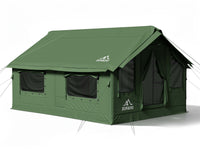
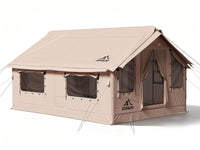
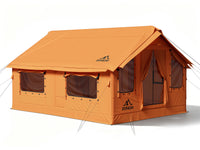
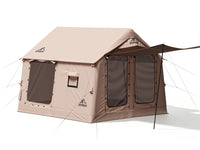
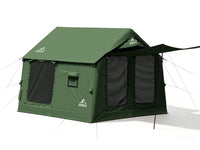
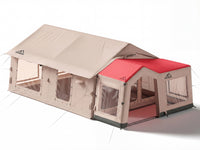
ZONKOO inflatable tents use an air-beam structure, eliminating the need to assemble traditional tent poles one by one. Their cabin-style shape and relatively vertical sidewalls also make better use of the interior, making it easier to arrange cots, gear, and everyday camp space.
For weather protection, ZONKOO inflatable tents use PU5000 mm waterproof fabric and, when properly pitched and secured, can withstand winds of up to 50 mph. Multiple windows provide natural light and airflow and can be adjusted as needed for ventilation and privacy.
Among the lineup, Lyra, Orion, and Vega are all better suited to hunting camps that can be reached by vehicle and remain in one location for several days. They differ in interior space, setup time, and stove-jack configuration, making each one better suited to different camp needs.
|
Model |
Usable Space |
Interior Height |
Setup Time |
Windows |
Stove Jack |
|
Lyra |
65 sq ft |
6′10″ |
3 minutes |
3 |
No |
|
Orion |
86 sq ft |
6′11″ |
7 minutes |
5 |
Yes |
|
Vega |
129 sq ft |
7′1″ |
11 minutes |
7 |
Yes |
For a solo camp with one cot and basic gear, the Lyra is a more manageable small inflatable tent. Its 3-minute setup and 29 lb weight make it easier to move from the vehicle to the campsite and get camp set up quickly.
Orion is a better fit for hunters who want more room without moving up to the largest option. Its 86 square feet of interior space leaves more room for a cot and gear, while five windows make it easier to adjust ventilation. If you plan to use a tent stove, the stove jack also provides a dedicated opening for the chimney pipe.
For larger groups or camps that need room for multiple cots and more gear, Vega is better suited to greater space needs. Its 129 square feet of interior space and 7′1″ interior height leave enough room for standing, changing clothes, and organizing gear after beds and equipment are in place. The removable divider can also separate sleeping space from gear storage, making the interior easier to manage during a longer group stay.
Choose a Tent That Fits the Way You Hunt
There is no single tent setup that works for every multi-day hunt. When gear has to be carried into the hunting area, weight and packed size should come first. When vehicles can reach camp and the group will stay in one location for several days, interior space, weather protection, and setup convenience can take priority.
Even at a fixed camp, the right amount of space and the right features will depend on group size, the number of cots, the amount of gear, and the season. Defining those needs first makes more sense than simply choosing the largest tent or the model with the most features.