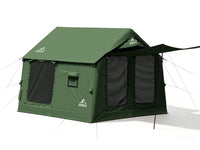
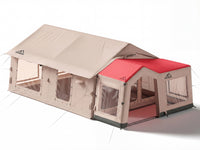
Inflatable tents are well suited for car camping not because they are lighter than other tents, but because the vehicle handles most of the transportation. Campers do not need to carry the tent over long distances, so they can focus more on ease of setup, interior space, and overall comfort.
For family weekend trips, road trips, and multi-day stays at a campground, a tent is more than just a place to sleep. Air mattresses, luggage, pet supplies, and extra clothing all take up space. When it rains or temperatures drop, family members may also need to rest and organize gear inside the tent. Inflatable tents eliminate most of the pole-assembly steps and provide greater interior height and a more usable interior layout, making them a good match for these car camping needs.
However, inflatable tents are not suitable for every trip. Before choosing one, campers should still consider trunk capacity, campsite size, packed weight, and the distance the tent needs to be carried.
How Are Tent Requirements Different for Car Camping?
When choosing a tent for backpacking, the first question is whether it is light enough to carry. Car camping is different because the tent and most other gear are transported to the campground by vehicle, so weight is no longer the only priority. Instead of saving a few pounds, campers are often more concerned about whether the tent is easy to set up, whether there is still room to move after the beds are arranged, and whether a family can stay in the tent for several nights without feeling crowded.
Car campers also tend to bring more gear. In addition to sleeping bags and sleeping pads, they may carry air mattresses, luggage, lighting, and pet supplies. If the tent only has enough space for the beds, belongings can quickly pile up near the entrance, making it harder to get in and out, change clothes, or organize gear. During rain or colder weather, the tent may also serve as a place to rest and sort equipment, so available space can directly affect the camping experience.
The travel schedule also changes what campers need. When moving to a new campground every day, the tent should be quick to set up and easy to pack away. When staying at the same campground for several nights, standing height, ventilation, and interior layout become more important. A larger tent is not always better. Campers also need to consider whether it will fit in the trunk, whether it is easy to carry to the campsite, and whether it will fit within the available setup area.
For car camping, the right tent should balance vehicle transport, campsite setup, and everyday comfort.

Vehicle Transport Reduces the Impact of Tent Weight
Inflatable tents use air beams for support, and larger models also use more fabric in the tent body, groundsheet, doors, and windows. As a result, their packed weight may be higher than that of smaller pole tents. This is also why inflatable tents are less commonly used for long-distance backpacking. For car camping, however, the tent is mainly transported inside the vehicle, so its weight becomes less of a concern as long as it fits in the trunk.
With the vehicle handling transportation, campers can choose a model with more interior space and greater headroom without carrying it over long distances. For those bringing camping beds, luggage for the whole family, or pet supplies, these space advantages are often more valuable than keeping weight as low as possible.
Weight can still affect loading and the final carry to the campsite. Before buying, check the tent’s packed dimensions and weight, and confirm how far the parking area is from the campsite. This helps prevent the tent from taking up too much trunk space or becoming difficult to carry after arrival.
Air-Beam Construction Reduces Tent Setup Steps
Traditional pole tents require campers to identify different poles, connect them, and then thread them through sleeves or attach them to the tent body. The larger the tent and the longer the poles, the more likely it is that setup will require more than one person.
After spreading out the tent and securing the corners, campers can use a pump to inflate the air beams, allowing the main structure to take shape. Campers do not need to handle several intersecting poles, which reduces the chance of setting them up in the wrong direction or missing a connection point.
This setup method is especially convenient for families, solo campers, and anyone arriving at a campground after dark. On road trips that involve moving to a new campground every one or two days, avoiding repeated pole assembly can also make daily setup and packing easier to manage.
However, fast inflation does not mean the entire tent can be fully set up in just a few minutes. Once the tent is standing, the corners still need to be secured with stakes, and the guy lines should be adjusted for the weather. Beds, lighting, and personal belongings also need to be arranged again. The inflatable structure reduces pole assembly, but it does not replace proper staking and guy-line tensioning.
More Space for Families, Pets, and Multi-Day Stays
Car camping makes it possible to bring air mattresses, camping cots, luggage, and more everyday gear, but the available space inside the tent can shrink quickly as equipment adds up. Choosing a larger inflatable tent is not just about increasing sleeping capacity. It is also about leaving enough room for beds, walkways, storage, and daily activities.
For family camping, there should still be space to move around after the beds are set up, with designated areas for luggage, extra clothing, and lighting. Greater interior height also makes it easier for adults to stand, change clothes, and arrange the sleeping area. When several people share the tent, sufficient floor space and a practical door and window layout can also reduce congestion near the entrance.
Camping with pets creates additional space needs. A dog bed, water bowl, and clear walkway each need their own space, and pets need enough room to turn around, rest, and reach the door without knocking things over. If the tent only has enough space for people and beds, pets and family members can easily get in each other’s way.
Space becomes even more important during a stay of several nights. Luggage is accessed repeatedly, while extra clothing and everyday items gradually spread out. Keeping the sleeping area, gear area, and temporary activity space separate helps prevent the tent from becoming cluttered. During rain or colder weather, family members can also organize gear, care for pets, or rest inside without having to sit on the beds the entire time.
A larger tent therefore provides more than extra sleeping capacity. It allows easier movement, clearer organization, and a more comfortable multi-day camping experience. These benefits are especially valuable for families, campers traveling with pets, and anyone planning to stay at the same campground for several nights.
Which Inflatable Tent Is Right for Each Car Camping Trip?
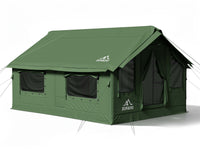
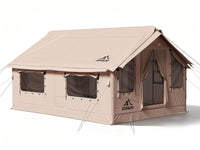
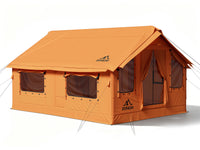
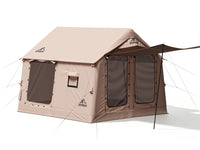
Different car camping trips place different demands on portability, interior space, and layout. ZONKOO’s five inflatable tents are suited to short trips, family weekends, group camping that requires separate zones, and longer campground stays. Campers can choose based on group size, how often they move, and how long they plan to stay.
Road trips that involve frequent campground changes are better suited to compact models with fewer setup steps. Lyra is an easy-to-carry small inflatable tent for couples, short trips, and small families, and it can reduce the effort required for repeated setup and packing.
Weekend car camping for two to four people requires a balance between space and convenience. As an inflatable camping tent designed for regular campground use, Orion has room for beds and basic luggage while providing comfortable headroom and ventilation, without becoming unnecessarily difficult to carry or pack.
For family stays of several nights with two to six people, the tent needs more room for beds, clothing, and daily activities. Vega is a more spacious inflatable family tent for families that want to keep clear walkways and keep beds and luggage from crowding the same space.
For larger groups, increasing sleeping capacity alone may not solve crowding. Draco is a large inflatable tent designed with space organization in mind, making it easier to separate sleeping, gear, and temporary activity areas and keep campers from getting in each other’s way.
For longer stays at the same campground, families may also need a sheltered area for eating, talking, or organizing gear. Draco Plus is a better fit for this use. This inflatable glamping tent combines a main tent with a gazebo, separating the sleeping area from the daytime living space for longer group stays and campsite gatherings.
What Should You Check Before Using an Inflatable Tent for Car Camping?
First, check your trunk space. Review the tent’s packed size and weight, and consider how much room will also be needed for mattresses, tables, chairs, personal luggage, and other gear. A tent may fit inside the vehicle, but that does not mean it will still be convenient once everything else is packed.
Next, check the campsite size. Large inflatable tents take up more room when fully set up, and the space required for guy lines means the total setup area will be larger than the tent floor itself. Before booking, confirm the size of the tent pad or campsite.
You should also consider the distance between the parking area and the campsite. If the vehicle cannot be parked next to the tent site, whether your group can carry a large tent will directly affect the experience after arrival.
The pump setup should also be checked in advance. A manual pump does not require power but takes more effort, while an electric pump is easier to use but may depend on a vehicle outlet, power socket, or separate battery. After inflation, check the pressure according to the product instructions to avoid overinflation.
When packing up, a large inflatable tent needs to be fully deflated before being folded in the correct direction. Some models are easier to handle with two people. If the tent must be packed while wet, it should be opened again and dried completely after returning home.
Finally, air beams replace traditional poles, but they do not replace stakes and guy lines. Use all available anchor points during setup and check the guy-line tension when wind conditions change.
Further reading: Using an inflatable tent for the first time? Read ZONKOO Inflatable Tent Instructions | Setup, Use, and Storage Guide to learn more about inflation, anchoring, and packing after rain.
Choose a Tent That Fits Your Car Camping Style
A suitable car camping tent should not only feel spacious after setup. It also needs to fit inside the vehicle, be manageable to carry to the campsite, and work with how often the tent will be set up and packed away. For frequent campground changes, a compact, easy-to-handle model is more practical. For families or campers traveling with pets and staying several nights, more room is needed for beds, luggage, and daily activities.
Once these needs are clear, choosing a tent becomes less about comparing stated capacity and more about finding a tent that truly fits the pace of the trip.